

























































San Diego is promising to send a bigger slice of its paving budget into neighborhoods it labels “Communities with Equity Needs,” even as the city quietly resets how good its streets are expected to be. In its FY26 Pavement Management Plan update, the Transportation Department keeps a new equity metric in place but shifts the citywide target from “satisfactory” toward “fair,” a move officials tie to tight budgets.
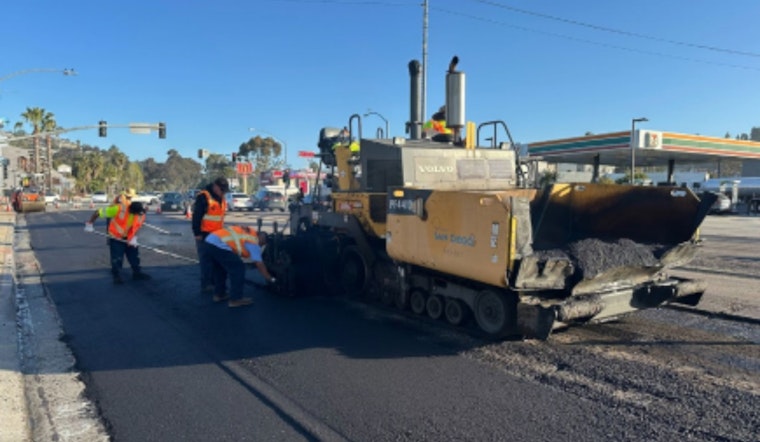
The FY26 update locks in an equity benchmark that calls for at least 43% of annual paving dollars to land in underinvested communities, and the department notes that 52% of streets picked for 2026 maintenance are inside those areas. The same report spotlights an expanded in-house paving program, with city crews completing about 24 lane miles of curb-to-curb rehabilitation in FY25 and setting goals for more local production in the next fiscal year, according to City of San Diego.
City spokesperson Ramon Galindo told KPBS that “FY25 was the first year it was implemented and tracked as part of the street selection process.” KPBS reports that the update also formalized a pothole strategy that pairs the Get It Done app with a dedicated crew that proactively targets neighborhoods that tend to under-report problems. During October 2025, roughly 14% of pothole fixes were generated proactively by crews, and about 29% of completed pothole notifications from July through September 2025 occurred in equity communities.
The budget tradeoff
All of this is happening while the department works with far less cash than planners once assumed. The FY26 update shows the city programmed about $83 million for pavement work this year, roughly 32% of the annual level modeled in the FY24 plan. Under those revenue assumptions, the report concludes the city should focus on holding an average pavement condition index, or PCI, of 65 instead of aiming for a PCI of 70. It estimates a roughly $1.8 to $1.9 billion 10-year funding need and a large multi-year gap, and it frames the lower goal as more financially realistic under current conditions, according to City of San Diego.
Why some residents say it won't be enough
Neighborhood leaders who have been sounding the alarm for more than a year say the new equity language does not erase an earlier tradeoff that favored faster, cheaper fixes over rebuilding the worst streets. When the plan first rolled out in January 2024, residents in lower-income, majority Black and Latino parts of District 4 warned that the “best value” approach would leave their streets lagging behind those in wealthier District 5, as KPBS reported in 2024. That frustration is now colliding with the fact that the mayor’s proposed budget to close a roughly $118 million shortfall could slow how quickly the city can ramp up paving overall.
The City Council was scheduled to hear the FY26 update on Monday, setting the stage for council members and community groups to decide whether keeping an equity floor while lowering the citywide condition target is an acceptable tradeoff. Local reporting pegs the 10-year bill to reach a PCI of 70 at roughly $1.9 billion, a price tag that helps explain why officials opted for a lower, more attainable goal this year, as reported by 10News.



