

























































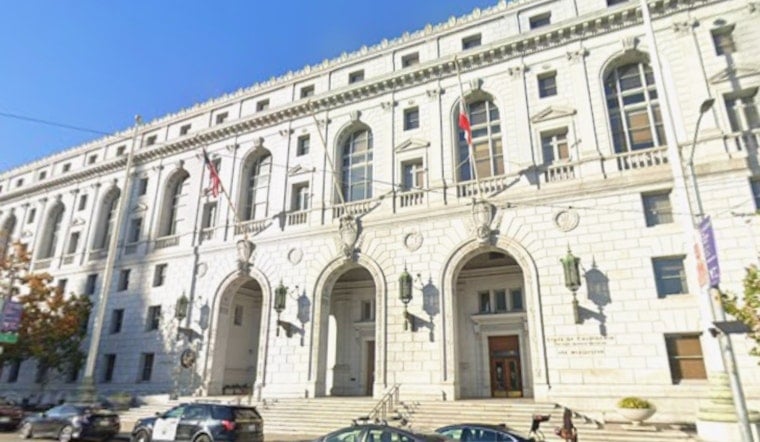
Yesterday, the California Supreme Court handed down a unanimous opinion in In re Kowalczyk, sharply narrowing when judges can rely on cash bail to keep people behind bars before trial. The justices said trial courts must factor in a defendant’s finances as part of a broad reasonableness test that looks at the totality of the circumstances. The ruling tries to square two pieces of the state constitution: a long‑standing right to pretrial release and a voter‑approved provision that puts public and victim safety at the forefront.
The case traces back to a January 2021 arrest, after Gerald John Kowalczyk tried to use credit cards he said he had found at a fast‑food restaurant. A San Mateo County judge set bail at $75,000, and Kowalczyk, who was homeless and unemployed, could not come close to paying it, according to The Associated Press. He later pleaded no contest to a misdemeanor in exchange for a sentence of time served, but his pretrial lockup became the vehicle for the state’s high court to revisit how bail is used, according to CalMatters.
What the high court held
Chief Justice Patricia Guerrero wrote that trial courts must use a reasonableness analysis, considering the totality of the circumstances when setting bail and must take into account what an arrestee can realistically pay. The opinion says judges may not pick a dollar figure that is “objectively unattainable” simply to ensure someone stays in custody, and it instructs courts to look first at whether nonfinancial conditions can manage any public‑safety risk before ordering detention, according to the California Supreme Court.
How this fits with Humphrey
The ruling builds on In re Humphrey (2021), which held that locking someone up solely because they cannot afford bail violates equal protection and due process. In practice, though, that earlier decision did not fully transform the system. A 2022 review by the UCLA School of Law found that Humphrey did not end cash bail in day‑to‑day courtrooms and that many counties continued to lean on unaffordable monetary conditions, according to the UCLA School of Law.
Reactions and the concurrences
Public defenders and civil‑rights advocates quickly praised the new decision as a long‑overdue curb on what they describe as wealth‑based detention. Prosecutors, for their part, responded more cautiously, arguing that cash conditions can be a useful tool to make sure people show up for court.
In a concurring opinion, Justice Joshua Groban wrote that the widespread habit of setting sky‑high bail that defendants have no hope of paying is “generally inconsistent” with pretrial rights. Another concurrence urged lawmakers or the governor to step in and work through the policy questions the court left unresolved, as reported by CalMatters.
What to expect next
The opinion does not abolish cash bail, but it does take away much of its use as a backdoor detention tool, a shift that could reshape arraignment calendars and release hearings across California. Prosecutors have argued that financial stakes are sometimes necessary to ensure court appearances and protect the public, and the political fight over bail policy is far from settled. Voters rejected a 2020 ballot measure that would have scrapped the traditional bail system, and that backdrop still looms over the current debate, according to The Associated Press. Trial courts are now expected to tighten up their written findings, and legislators may weigh in with clearer statutory rules.
Legal implications
The court’s practical test requires judges to start by deciding whether monetary bail is reasonably necessary at all. If it is, they must choose an amount the arrestee can reasonably afford. If prosecutors want someone held without meaningful bail, the court must make specific findings, backed by clear and convincing evidence, that no nonfinancial condition can adequately address safety or flight‑risk concerns. The opinion also urges judges to explain their reasoning on the record so that higher courts have something concrete to review, per the California Supreme Court.
On the ground, Bay Area judges, public defenders, and district attorneys are now poring over the fine print to see what it means for local arraignments and bail hearings. For courts in San Mateo County and beyond, the ruling is likely to mean more individualized findings and, in at least some cases, fewer people sitting in jail simply because they cannot afford to post bail.





