

























































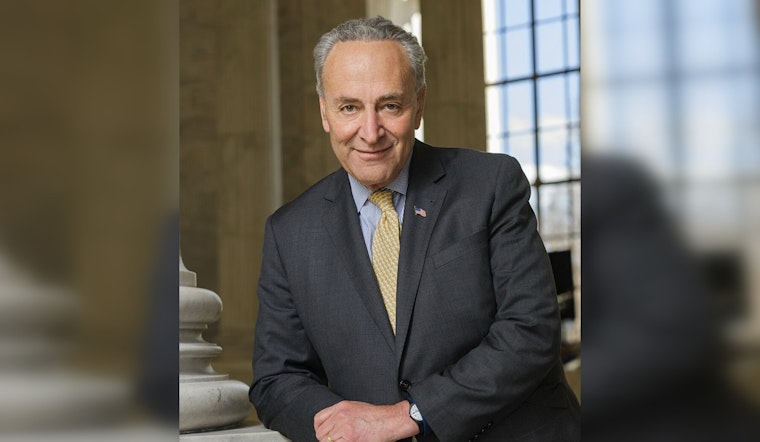
As Memorial Day cookouts sizzled across New York, Senate Majority Leader Chuck Schumer used the long weekend to sell a bold idea: break up the country’s meatpacking giants and, he argues, bring down the price of burgers, steaks and chicken at local supermarkets. His Family Grocery and Farmer Relief Act is pitched as a way to strip market power from the biggest packers and push more processing back toward local farms, butchers and cooperatives.
What the Bill Would Do
The proposal would block covered packers from running beef, pork and poultry lines at the same time and would empower the Federal Trade Commission to order structural separation or divestitures where it finds excessive market power, according to Schumer’s office.
The text filed in Congress also spells out which companies qualify as covered meatpackers and sets up technical and financial help for farmer cooperatives to buy, build or run local slaughter and processing plants, per the bill record on GovInfo.
“When you don't have good, old‑fashioned American competition, the prices go up,” Schumer said as he rolled out the plan in Western New York, pointing to local butchers and family farms that he says are squeezed by limited processing capacity, according to Schumer’s office.
What Shoppers Are Already Paying
The fight is landing in the middle of a broad political brawl over food inflation. An analysis from the Center for American Progress found that ground beef prices were up roughly 19 percent year over year.
Bureau of Labor Statistics city‑average data show the retail price of 100% ground beef hovering near $6.70 a pound in March and about $6.90 in April, according to the BLS series hosted on FRED/BLS.
The legislation itself cites Department of Agriculture reporting that ground beef prices rose about 16.4 percent over the prior year, a figure lawmakers use to argue that concentrated markets are helping keep prices high, according to GovInfo.
Industry Pushback and Farmer Support
Big meat is not exactly lining up to cheer this on. The trade group the Meat Institute blasted the bill as “absurd,” warning that forced divestitures could actually reduce processing capacity, push costs higher and put jobs at risk.
Editorial critics have also questioned the diagnosis. Tight supplies, driven in part by drought and a smaller national cattle herd, explain much of the price surge rather than consolidation alone, an opinion column in The Washington Post argued.
Farm‑focused groups and some producers are greeting the bill with cautious optimism rather than a victory lap. R‑CALF USA has said it will closely examine the proposal and join the debate. The New York Beef Council points out that the state cares for roughly 1.4 million head of cattle, including more than 102,000 beef cows, figures Schumer and allies cite to underline how national policy translates to local pastures.
On the supply side, tech and drought watchers keep pointing to the same cloud on the horizon. Prolonged drought across North American rangelands has tightened cattle supplies and helped push prices higher, according to Andrew Coppin, co‑founder of RanchBot, who spoke with Spectrum News.
Legal and Enforcement Backdrop
Schumer’s bill is arriving as federal enforcers are already poking hard at the sector’s power structure. Prosecutors have opened antitrust scrutiny of the biggest beef processors, according to reporting by Bloomberg.
In early May, the Justice Department filed a proposed settlement to require Agri Stats to stop sharing granular competitor pricing and production reports, according to the Justice Department.
Together, those moves are changing the regulatory and political landscape for both packers and buyers, legal experts say, as cited by Bloomberg.
For now, Schumer’s measure has simply entered the legislative grinder, having been introduced and sent to the Senate Judiciary Committee. Its future depends on whether lawmakers and regulators ultimately rally around structural breakups, tougher enforcement using existing tools, or more traditional supply‑side fixes. In the meantime, the bill keeps a bright, political spotlight on what Americans are paying at the meat counter every week.





