

























































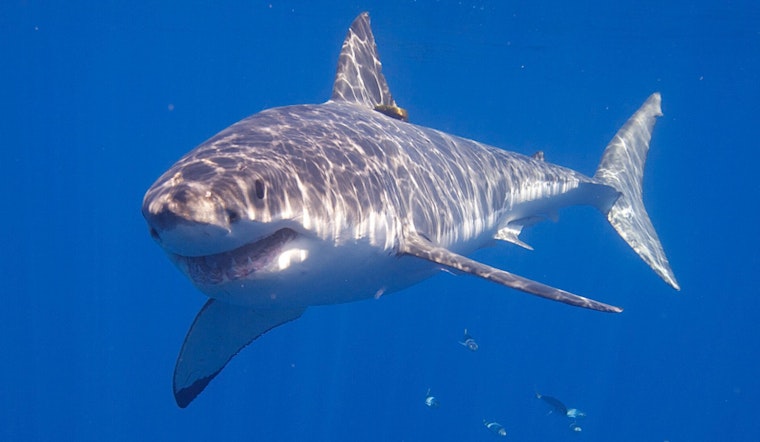
Summer shark season on Martha's Vineyard is officially underway, and it started with a grim calling card on the sand.
Scientists have confirmed the first great white shark of the season off Martha's Vineyard after a dead gray seal washed ashore with a large bite wound at Lucy Vincent Beach in Chilmark. The find on Sunday came after local responders documented the carcass with photos, which were then reviewed by regional shark experts.
The New England Aquarium said images taken by Andrew Jacobs of the Wampanoag Tribe of Gay Head's Natural Resource Department were examined by Aquarium scientists, and that Jacobs reported the suspected shark bite to the Massachusetts Division of Marine Fisheries, according to NBC Boston. Researchers determined the size and pattern of the wound were consistent with a white shark.
"This is just the beginning of white shark season in New England, and it serves as a good reminder to be mindful of the presence of these sharks in inshore waters," John Chisholm, an adjunct scientist at the Aquarium’s Anderson Cabot Center for Ocean Life, said. He and other scientists urged beachgoers to be "shark smart" by steering clear of areas with seals or schools of fish and by staying close to shore, as reported by NBC Boston.
Why Sharks Are Showing Up Near The Island
Researchers say white sharks move north in the spring to follow seal populations and often pass near island waters on their way to Cape Cod and the Gulf of Maine, with peak activity usually arriving later in the summer and fall. Greg Skomal, a senior biologist with the Massachusetts Division of Marine Fisheries who works with the Atlantic White Shark Conservancy, told The Martha's Vineyard Times that the seal's wound appeared older and may have been inflicted offshore before the carcass drifted in.
How Sightings Are Tracked
Reports and predation events are logged through the Atlantic White Shark Conservancy’s Sharktivity app, which lets users submit sightings and get near real time alerts about white shark activity, according to the Conservancy. Those community reports, along with tagging, aerial surveys and laboratory analysis by the New England Aquarium, help scientists map seasonal movements and shape public safety guidance, according to the New England Aquarium.
If you come across a stranded, injured or dead marine mammal, NOAA Fisheries advises staying at least 150 feet away and reporting the location and photos to NOAA’s Greater Atlantic Marine Mammal Stranding Hotline at (866) 755-6622 so trained responders can document and handle the animal. Beachgoers are also urged to keep an eye on Sharktivity notifications and to follow local lifeguard instructions as the season ramps up around Memorial Day.





.jpg)