

























































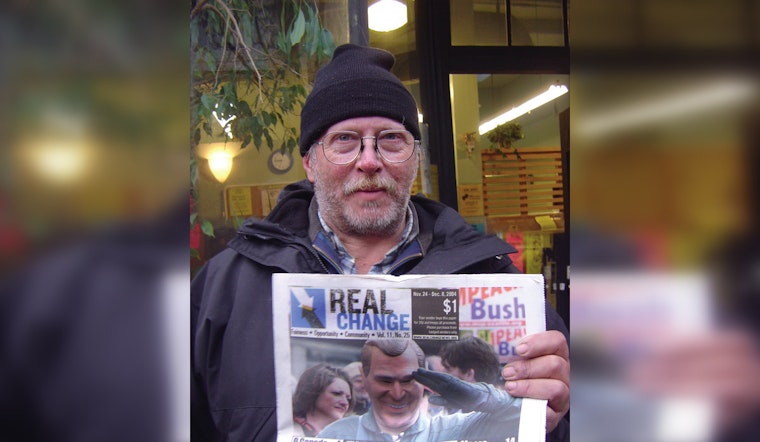
Real Change, Seattle's nonprofit street newspaper, quietly made a big move last Wednesday, May 6, when it doubled its cover price from $2 to $4. The goal, the organization says, is simple: get more money into the pockets of the vendors who buy papers at a discount and sell them on sidewalks across the city. Now everyone is watching to see whether customers will keep reaching for their wallets at the higher price.
The board approved the hike after years of back-and-forth, pointing to rising production costs and a shrinking print footprint as the main drivers, according to The Seattle Times. Printing costs have climbed about 75% since 2013, and circulation has dropped sharply in recent years, the paper reported. The $4 cover officially kicked in last Wednesday.
For longtime vendors, the math feels personal, not theoretical. Harlan Wood, who has sold Real Change for 16 years, told The Seattle Times that the extra dollars can really add up by the end of a shift, quipping, “there's your change, right?” On a good seven-hour day, he said he can make $70 to $100. When every dollar counts, even small shifts in customer behavior can make or break a day’s take-home pay.
What Vendors Stand To Gain
Vendors traditionally buy each copy of Real Change for about $0.60, then sell it at the cover price and keep the difference, according to KUOW. At the old $2 price, that worked out to roughly $1.40 in gross income per paper. With the cover now at $4, that per-paper gross should rise significantly if the vendor purchase cost stays the same. Real Change says the shift is meant to shore up vendor incomes while the organization adjusts to a smaller print run.
Why The Publisher Raised The Price
Behind the scenes, Real Change has been wrestling with the same financial pressures hitting media outlets everywhere, just on a tighter margin. Public nonprofit records and filings, summarized in databases that track 501(c)(3) organizations, show a marked drop in annual distribution and increasingly thin margins, according to ProPublica. The board has framed the price increase as a way to keep the vendor program alive while the paper looks for other ways to stabilize revenue and shore up circulation.
Will Customers Keep Paying?
Whether buyers will stick around at $4 is still an open question. Some vendors and board members argue that in a city with Seattle’s cost of living, $4 for a paper that directly supports low-income and homeless vendors is still an easy yes. Others worry that the jump could scare off casual, spur-of-the-moment purchases and quietly shrink vendors’ daily earnings.
Historically, Real Change has employed hundreds of vendors over the course of a year. Today it typically provides monthly work to roughly 250 vendors, according to United Way of King County. Whether that number grows or shrinks under the new $4 price tag will be one of the clearest tests of whether the gamble pays off.





