

























































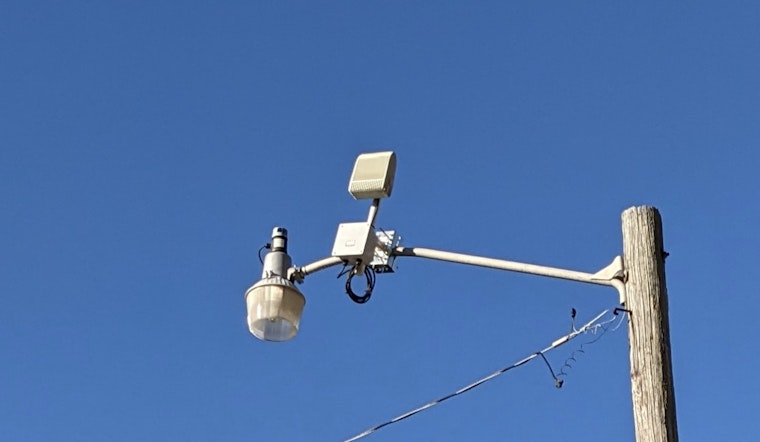
New Orleans has quietly cut ties with ShotSpotter after an eight-month test run that produced more questions than clear wins. The New Orleans Police Department has opted not to extend the acoustic gunfire-detection pilot that covered parts of the Fifth District from June 2025 through Feb. 28, 2026. Public reporting pegs the outcome at a single arrest tied to the system during that span, and a mix of cost concerns and critical independent review helped convince city leaders to walk away from a permanent deal.
NOPD declines long-term contract
According to NOLA, NOPD told the City Council on March 30 that it would not recommend moving ahead with a long-term ShotSpotter contract after the pilot. Officials cited budget priorities and doubts about how much the system added on top of traditional 911 calls. The test covered roughly five square miles in the Fifth District, including Bywater, St. Claude and parts of the Ninth Ward.
Independent review: thousands of alerts, few confirmed
An analysis by Innocence & Justice Louisiana examined NOPD calls flagged as ShotSpotter alerts from June 18, 2025 through Feb. 28, 2026. Researchers found 1,399 alerts tied to 1,010 unique incidents. Only about one in four of those incidents, 24.3 percent, resulted in a formal police report. Officers spent an estimated 932 hours responding to alerts that often did not turn up any evidence of gunfire.
The group identified 14 life‑threatening scenes in the data, including nine confirmed shootings and three homicides. Only four of those did not have a matching civilian 911 call, suggesting that in most of the most serious cases, traditional reporting channels were already in play.
Company pushes back
SoundThinking, the company behind ShotSpotter, has highlighted the technology’s role in speeding up responses and preserving evidence in its own materials. The company points to studies and customer testimonials that describe time savings for officers.
CEO Ralph Clark told The News Tribune that ShotSpotter "is not an arrest machine" and argued that arrests should not be the only metric used to judge its value.
Price tag and budget tradeoffs
City officials estimated that keeping the Fifth District coverage up and running would cost about $350,000 per year, according to NOLA. Separately, SoundThinking’s published list price is roughly $70,000 per square mile, Axios reported. Together, those figures underscored that any long-term contract would be a recurring six‑figure commitment at a time when the city has competing public safety needs.
What the public data doesn't show
The Innocence & Justice Louisiana report relies on NOPD dispatch records linked to ShotSpotter alerts. The authors note that the dataset does not include arrest logs, evidence inventories or longer-term case outcomes. That means the analysis alone cannot show how many alerts ultimately led to prosecutions or recovered evidence.
The report urges NOPD to release more detailed, case‑level data so outside researchers can fully evaluate the system’s investigative value rather than relying on partial snapshots.
Civil-liberties advocates warn of overpolicing
National civil-rights groups have long warned that ShotSpotter can send officers repeatedly into neighborhoods where no crime is ultimately confirmed. The MacArthur Justice Center documented that a large share of ShotSpotter deployments in Chicago did not produce evidence of a gun‑related crime, and a New York City Comptroller audit raised similar concerns about low confirmation rates and heavy officer time costs.
Local advocates say those patterns, combined with the concentration of alerts in certain New Orleans neighborhoods, show why independent review and meaningful community input should come before any wider rollout of gunshot detection tech.
What's next
With no ShotSpotter contract on the table, city leaders are weighing other options. They may look at different technologies, expand support for violence‑intervention programs, or steer the money toward staffing and traditional patrol resources, Axios reports.
Both supporters and skeptics of ShotSpotter agree on at least a few next steps: more transparency, independent evaluation and clear budget accounting before New Orleans signs on to any future high‑tech public safety tools.





