

























































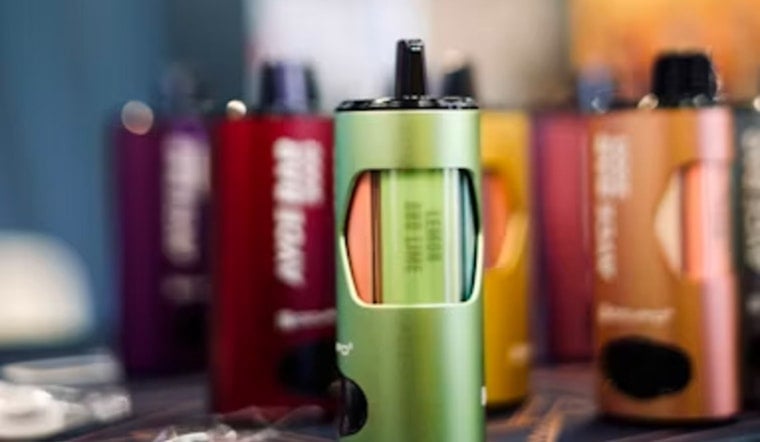
Those disposable "high-puff" vapes that promise thousands of hits may be quietly turning on their users as they run low. A new university study finds that used devices can build up toxic aldehydes in their leftover liquid, and that the fluid in a heavily vaped disposable may be far more harmful to lungs than the same flavor fresh out of the box. In lab tests, the accumulated chemicals methylglyoxal (MGO), glyoxal (GO), and formaldehyde caused clear damage to human lung cells.
According to UC Riverside, researchers compared the leftover liquid in used high-puff devices collected around Southern California with fresh, unused versions of the exact same brands and flavors. The study, published in ACS Omega, reports that MGO and GO in some heavily vaped fluids reached milligram-per-milliliter concentrations, levels the authors characterize as far beyond trace amounts. The team homed in on aldehydes because they form when e-liquids are heated, and several in this chemical family are already recognized as toxic.
"Several aldehydes we measured are known toxicants, and formaldehyde is a recognized carcinogen," said Esther Omaiye, the paper's first author. Omaiye and co-author Prue Talbot caution that someone using a high-puff disposable near the end of its life could be inhaling significantly higher amounts of these compounds than a person vaping a fresh device. The study notes that the work was funded by the National Institutes of Health, the FDA Center for Tobacco Products, and California's Tobacco-Related Disease Research Program, according to EurekAlert.
What researchers measured
The authors exposed cultured human lung cells to MGO and to acetaldehyde to gauge how toxic the chemicals were, then watched what happened to the cells. They observed disrupted cell structure, problems with energy production, and a spike in oxidative stress. In the study's direct comparisons, MGO came out as roughly 10 to 100 times more toxic than acetaldehyde in their assays, a gap the paper flags as especially troubling. While the exact chemical levels varied by brand and flavor, the pattern was consistent: more heavily vaped devices tended to show more aldehyde buildup in their remaining liquid.
Implications for users and regulators
Because many disposable vapes now brag about delivering thousands of puffs, the researchers argue that puff count should not be treated as a marketing gimmick but needs to be part of safety testing and product evaluation. Coverage of the work echoes that concern. Reporting on the study notes that the sampled devices came from Southern California and urges clearer disclosure about what users are actually inhaling as a disposable ages, according to Scienmag. The results land amid ongoing efforts in California and other states to curb youth vaping, a policy backdrop outlined in Hoodline's recent reporting on state flavor-ban measures and evolving enforcement.
Until regulators require testing across an entire device life cycle, the study's practical message is straightforward: treat high-puff disposables with extra caution as they near the end of their advertised puff counts. The authors argue that both manufacturers and regulators should factor in how chemical exposure changes over the lifespan of a product rather than relying solely on tests of the liquid when the device is new.



