

























































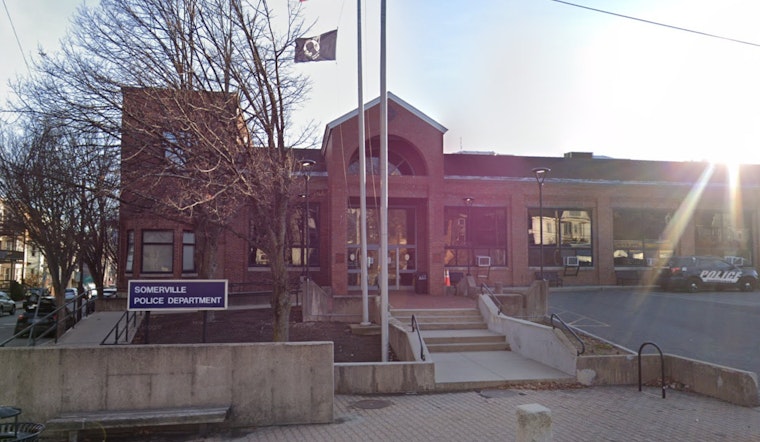
Somerville has kicked off a new Co-Response Pilot Program that sends Somerville Police officers out on certain 911 calls with a public-health professional from the city’s Community Outreach, Help & Recovery (COHR) team. The goal is to bring real-time support to mental-health, substance-use and welfare-check calls while the city figures out how well the setup works in practice.
For now, the co-responder will work two four-hour shifts per week. During those windows, they will be dispatched alongside officers for a pre-set list of 911 call types, and the city will track how often and how effectively the model is used. Officials are describing this short pilot as a test run to fine-tune operations and strengthen connections to care, not as a full-time overhaul of existing crisis protocols. Somerville Police say officers will still rely on their crisis-intervention and de-escalation training any time a co-responder is not on duty.
How the Pilot Works
According to the City of Somerville, the current co-responder is a COHR staff member who will ride out on specific call types, including mental-health crises, substance-use incidents, welfare checks and a range of conflicts or disturbances.
During co-response hours, officers can also request the public-health professional when they think it would help, even if the call type is more general. After the immediate situation is addressed, COHR may step back in to provide follow-up services, referrals and other supports so people are not left to navigate the system alone.
What City Leaders Said
Mayor Jake Wilson framed the new approach as the product of sustained organizing and planning, not a quick pivot.
“The launch of this pilot is the result of years of intense community and cross-departmental work that identified a need and sought to address it,” Wilson said in the city’s announcement.
Police Chief Shumeane Benford called the pilot “a direct response to our community recommendation to advance alternative responses to mental health crises” and noted that it builds on COHR’s existing jail-diversion and crisis-intervention efforts within the department.
Roots in Public Safety for All
The Co-Response Pilot Program traces back to Somerville’s Public Safety for All process, which pushed for a co-response model that would expand on COHR and introduce more clinicians and peer support staff on the front lines.
The Public Safety for All Task Force report spelled out that recommendation, laid down a timeline and urged the city to track outcomes before scaling the model across Somerville.
Where to Get Help
For anyone in immediate crisis, Massachusetts directs residents to dial or text 988, a free, confidential lifeline available 24/7 and detailed on Mass.gov.
Community Behavioral Health Centers also run mobile crisis teams that can respond in person. They can be reached through the statewide crisis line at 1-877-382-1609, which is listed on Mass.gov.
Why Co-Response Matters and What to Watch
Co-response setups like Somerville’s are designed to cut down on arrests and steer people toward services instead, especially during mental-health or substance-use crises. Whether they actually do that, though, tends to hinge on how many clinicians are available, how reliably programs are funded and how strong the follow-up and referral systems are.
Local trainers and partners, including the Metro Boston CIT Technical Assistance Center, often emphasize the less glamorous pieces: building trust with residents, keeping communication tight between agencies and making sure there are real places to send people after the initial response.
National evaluations, including a Durham, N.C. RTI study of the HEART program, suggest that pilot teams can handle large volumes of calls and shift outcomes away from traditional enforcement. They also show that, once these teams prove useful, the demand for their help tends to grow faster than early staffing and schedules can keep up.
What’s Next
Somerville officials say the police department and COHR will track how often the co-responder is used during the limited pilot hours and what happens on those calls. Those numbers will help decide whether the city moves ahead with a larger, permanent version of the program.
The Somerville Times reported that the pilot officially went live on Friday and described it as one piece of a broader, years-long effort to rethink how public safety works in the city.





