

























































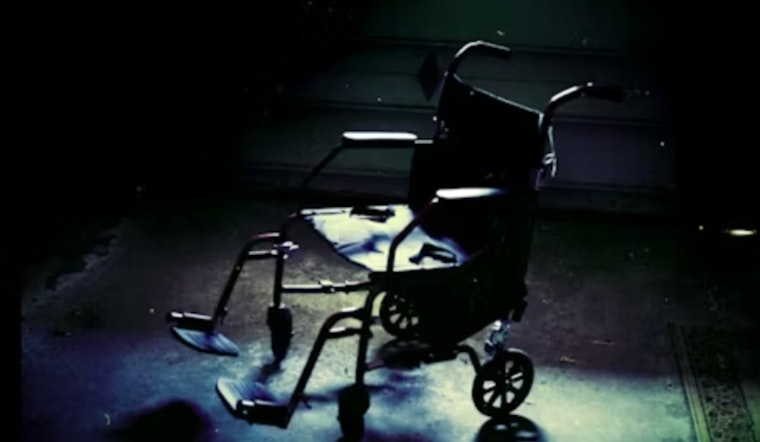
On a quiet block in Washington Heights, a daily ordeal has become routine for 58-year-old Cecilia Reed. When the exterior wheelchair lift outside her South Side home fails, she says she has only one option to get her 32-year-old son in and out of the house: haul or hoist him up a steep flight of stairs.
Their platform lift, installed in 2019, started breaking down in March 2024, Reed says. It reportedly stalls in the rain and quits in the snow, leaving her to muscle her son, Darrick Reed Jr., up and down the steps. Now, with a state-approved check set to lapse at the end of June, she says her son is effectively trapped in their home, and the family is running dangerously low on time to restore safe access.
In December 2025, the Illinois Department of Human Services signed off on $13,815 for a new exterior lift, but the replacement still has not materialized because the vendor has not filed the required permit with the city, according to FOX 32 Chicago. City records cited by the station show MobilityWorks, the company lined up to handle the purchase and installation, was told in March what it needed to submit for a permit application. Yet, according to Department of Buildings records reviewed by the station, no formal filing appears in the system. A letter tied to the state grant warns that the equipment must be purchased and delivered before June 30 or the funding could expire.
"This is dangerous… very dangerous," Reed told FOX 32 Chicago, describing how she now physically lifts Darrick when the platform refuses to budge. Darrick, 32, lives with cerebral palsy and scoliosis and weighs about 152 pounds, she said. Replacement parts for the aging lift are no longer available. "I'll die for him. And I shouldn't have to beg and plead to get help," she added.
Why permits matter in Chicago
Chicago does not simply let anyone bolt a lift to the side of a house and call it a day. The city’s building code requires formal permit applications and plans for elevators and platform lifts so Department of Buildings inspectors can review safety issues and inspection requirements, according to the Chicago Municipal Code. The ordinance also specifies that any installation or alteration of a platform lift must be performed by a registered elevator contractor and that inspections are required before new equipment can be put into service.
That process is supposed to keep families safe. It can also become a sticking point when a vendor believes it has already communicated with a city employee but never actually files the formal paperwork that starts the clock on a permit review.
State money meets market realities
Residential vertical platform lifts typically run in the low-to-mid five figures, depending on travel height and how much site work is needed, according to Lifeway Mobility. That puts the state’s $13,815 award in the ballpark for many standard models.
MobilityWorks, the national home-access company named by the family and city officials, outlines various lift options on its website and notes that older units can be tough to keep running once parts are discontinued. It is exactly the kind of repair headache the Reeds are living with now, as a narrow purchasing window collides with an aging, unreliable machine. What might have been a straightforward swap-out has turned into a race against time, paper trails, and bureaucracy.
What comes next
With June 30 drawing closer by the day, Reed says she is still pressing officials and the vendor for answers while she continues to carry the physical load of moving her son in and out of their home. Advocates and neighbors argue that administrative slowdowns should not be the barrier between families and what amounts to life-sustaining equipment.
The Reeds are hoping the permit gets filed, the purchase goes through, and the installation happens before the funding clock runs out. Until that happens, lugging a grown adult up and down a flight of stairs remains the family’s grim daily routine.





