

























































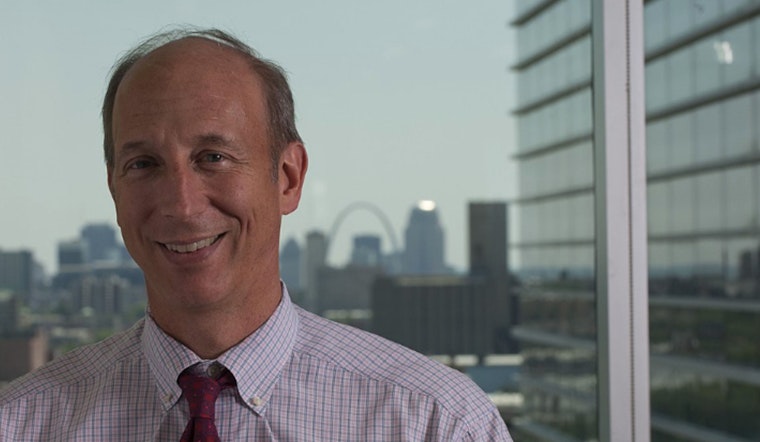
Two St. Louis scientists who spent decades at Washington University turning basic lab work into a real-world blood test for Alzheimer’s are about to get national spotlight in Washington, D.C. David Holtzman and Randall Bateman, co-founders of St. Louis startup C2N Diagnostics, are slated to receive the Bayh-Dole Coalition’s American Innovator Award at a ceremony on June 3, 2026.
The Bayh-Dole Coalition has named Bateman and Holtzman its 2026 American Innovators and will formally honor them at the June 3 event in Washington, according to the Bayh-Dole Coalition. According to Washington University's Office of Technology Management, the pair pioneered the PrecivityAD and PrecivityAD2 blood tests and co-founded C2N to move those assays from bench to clinic. Local broadcast coverage of the recognition first surfaced on STLPR.
How the Precivity Tests Changed Diagnosis
The PrecivityAD line uses blood biomarkers to estimate brain amyloid and tau status, giving many patients a less expensive and less invasive alternative to PET scans or spinal-fluid tests. Industry coverage notes that the original PrecivityAD test became available in 2020, and that the expanded PrecivityAD2, which adds a p-tau217 measure and an algorithmic Amyloid Probability Score, was later released as a clinical care assay, according to the company announcement archived at BusinessWire. That clinical release also notes the Precivity tests are intended to help clinicians triage patients and speed diagnostic workups so they can decide who needs more extensive imaging or spinal-fluid testing.
Earlier Detection and Equity
Recent research highlights just how far earlier blood markers might move the diagnostic timeline. A Nature Medicine study led by Washington University authors reported that p-tau217 “clock” models can estimate how many years remain until symptom onset, in some cases roughly 20 years before cognitive decline appears, according to Nature Medicine. In parallel, a 2022 analysis found that the PrecivityAD assay classified Alzheimer’s status equally well in Black and white participants, a key equity check for any blood biomarker, according to reporting from Washington University School of Medicine.
The science has also built a hometown company with global reach. C2N Diagnostics lists its St. Louis laboratory and headquarters in the Cortex innovation district at 4340 Duncan Avenue, and the startup, co-founded by Bateman and Holtzman, presents itself as both a clinical reference lab and a research partner for trials and health systems. The path from federally funded discovery to a St. Louis-based commercial lab is exactly the kind of translation the Bayh-Dole Act was meant to spur, a point underscored by the Bayh-Dole Coalition in its profile of this year’s honorees.
For St. Louis researchers and patients, the award is a reminder that the local research-to-market pipeline can turn an experimental biomarker into a routine tool for screening and trial enrollment. The Bayh-Dole recognition caps a long arc from early lab studies at Washington University to tests now offered in clinics and trial networks, bringing a fresh round of national attention to St. Louis science at a moment when blood biomarkers are rapidly reshaping how Alzheimer’s is detected and managed.





