

























































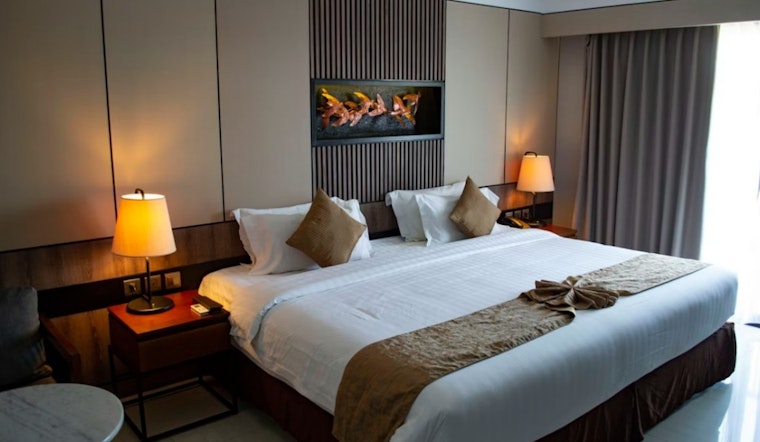
A St. Louis-built app is turning casual hotel-room snapshots into leads for child-sexual-exploitation investigators. The tool, TraffickCam, asks travelers to photograph their rooms so analysts can match those images against photos used by suspected predators. Developers and law enforcement say the system has already been used in criminal investigations and, in at least one case, helped analysts geolocate a live stream and trigger a rescue. Behind the scenes, it pairs everyday users' photos with computer-vision models that look for unique room details like artwork, carpeting and bedside lamps.
TraffickCam began as university research and is now maintained as a public project. The app's About page notes it is a product of Imaging for Good, a registered 501(c)(3). Recent local coverage has zeroed in on the St. Louis roots of the project and on efforts to scale it up with automated recognition models; FOX2 reported the TraffickCam database now holds more than 130,000,000 images. The project's goals and team are also outlined on TraffickCam.
How TraffickCam Locates Hotels
Users download the free app, select or identify the hotel and upload photos of beds, artwork, bathrooms and other room details. Those images are indexed and feed image-search models that investigators can query. The system converts photos into numerical embeddings so visual-similarity searches can quickly return likely locations, cutting a search from thousands of online ads down to a short list of candidate hotels. The technical approach and evaluation are described in the team's research paper, which lays out the image-embedding and search pipeline that powers the project.
Used By Investigators, Deployed At NCMEC
The investigative platform is in active use by analysts at the National Center for Missing and Exploited Children, who can run query images against the index to generate likely matches, IEEE Spectrum reported. That coverage also detailed a case in which analysts used a screenshot from a live stream, ran it through the system and were able to identify a hotel, a match that helped prompt law-enforcement action and a rescue.
Privacy, Limits And Oversight
Project leaders emphasize that the investigative tools are not open to the general public and that access is restricted to reduce the risk of misuse. The Investigative Platform page on TraffickCam explains the system is provisioned for use with NCMEC rather than as a public search engine. The TraffickCam mobile app itself is free on the Apple App Store and on Google Play, and those platform listings note that the app collects photos and may use location to provide its functionality.
Saint Louis University notes that the lab behind TraffickCam is working on new computer-vision models to make recognition tasks more scalable, funded in part by an NSF CAREER award to Dr. Abby Stylianou, which the university outlines on its site. If you encounter content you believe depicts child sexual exploitation, report it to the National Center for Missing and Exploited Children’s CyberTipline, NCMEC says.





