

























































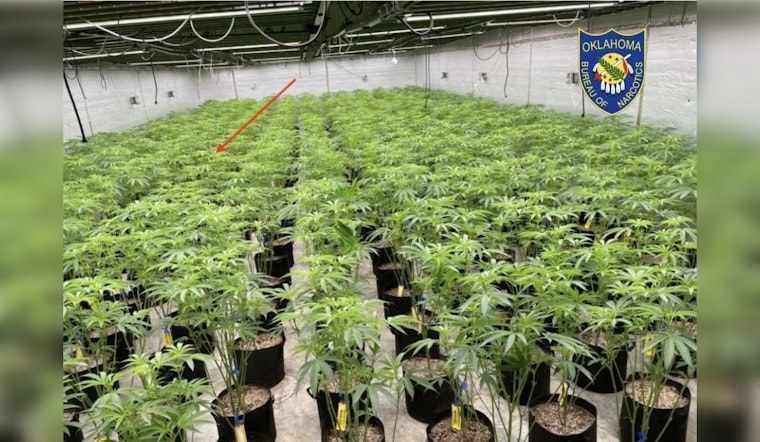
State narcotics agents swept through Muskogee County on Thursday, serving multiple warrants and tearing into what authorities describe as a large black-market marijuana operation. By the time the dust settled, thousands of plants and more than a thousand pounds of processed marijuana were seized, and four people were in custody as investigators worked to unravel an alleged distribution network that officials say supplied product inside Oklahoma and beyond state lines.
According to KOKH, agents with the Oklahoma Bureau of Narcotics hit five locations in Muskogee County: three homes, a marijuana dispensary warehouse and a grow facility. The outlet reports agents seized about 16,450 plants and roughly 1,320 pounds of processed marijuana, and that four people were taken into custody in the Tulsa-area investigation.
Part of a Larger Crackdown
The Muskogee County sweep is unfolding against the backdrop of a broader federal and state push against illegal marijuana grows in Oklahoma. A federal indictment unsealed April 27 charged 51 defendants in what prosecutors describe as a nationwide trafficking conspiracy, according to the U.S. Attorney’s Office for the Western District of Oklahoma. That case illustrates how, in the view of investigators, marijuana grown in Oklahoma can be funneled into markets in multiple other states.
Not an Isolated Bust
Recent local reporting shows this week’s raid is hardly a one-off. OBN agents have carried out several sizable seizures in a matter of weeks as marijuana enforcement teams target suspected illegal grows across the state. In April, for example, agents seized nearly 8,900 plants in a Wynnewood raid and raised concerns about the use of illegal pesticides at the site, according to KXII.
Legal Next Steps
Authorities had not immediately released the names of the four people taken into custody or any formal charges tied to Thursday’s operation, KOKH reported. If federal prosecutors ultimately decide to file related counts, the April indictment highlighted by the U.S. Attorney’s Office for the Western District of Oklahoma shows how such cases can stretch across wide networks of growers, brokers and transporters.




