

























































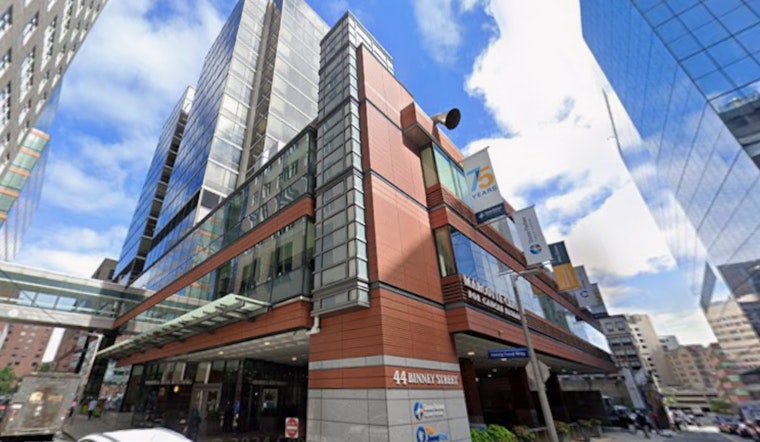
State regulators have signed off on Dana-Farber Cancer Institute's plan to build a roughly $50 million proton therapy center at its Longwood campus, clearing a major hurdle in the institute's push to expand advanced radiation services in Boston. The compact, single-gantry system is slated for a 4,500-square-foot ambulatory suite, with construction expected to start this spring and patient treatments projected to begin in late 2027. With the approval, Dana-Farber will gain its own proton treatment capability for both pediatric and adult patients in the region.
The Massachusetts Public Health Council voted to approve the Determination of Need for the project, allowing installation of the system at 35 Binney St. on Dana-Farber’s Longwood Medical Campus, according to The Boston Globe. The Globe reported the work is estimated at roughly $50.5 million and will occupy about 4,500 square feet.
What the center will offer
Dana-Farber says the new center will be built to treat both pediatric and adult patients, with capacity for more than 200 patients annually and up to 6,000 individual treatment sessions. It will use a compact seated or inclined single-gantry proton system, according to a news release from Dana-Farber Cancer Institute. In filings, the institute argued the machine will cut travel times for patients who currently have to visit other systems, while also supporting research and training across its pediatric and adult oncology programs.
Where it fits in the region
The new approval adds fuel to the competition over advanced radiation services in eastern Massachusetts, where Mass General Brigham currently owns the state's proton equipment and has promoted its centers as the region’s primary providers, according to The Boston Globe. Local business coverage has tracked the strategic stakes, from patient referrals to the steep capital costs involved, with Boston Business Journal noting how the move reshapes provider positioning around Longwood.
Statewide access and the policy angle
Advocates and hospital representatives told regulators that extra proton capacity is particularly important for pediatric cases and for tumors that sit close to critical organs, and national groups say proton access has been expanding. The National Association for Proton Therapy notes growth in centers nationwide, and Dana-Farber’s filings with the Massachusetts Department of Public Health state that the center is intended to serve patients across the region and help address gaps in access.
Construction is expected to begin this spring, with Dana-Farber saying the ambulatory center should be ready for patients in late 2027 as the institute moves into equipment procurement and staffing. Regulators will maintain public records of the Determination of Need docket as the project advances, and local oncologists say the new proton beam could ease travel burdens for families who must make daily trips for several weeks of treatment.




