

























































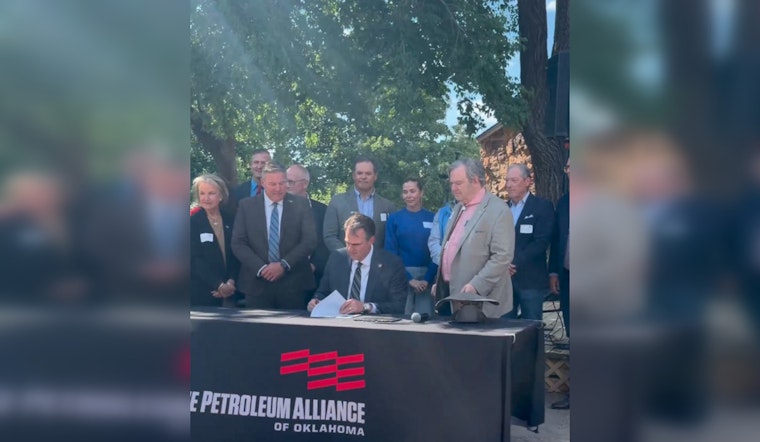
Gov. Kevin Stitt this week signed House Bill 1371, capping a decades-long fight over how Oklahoma handles oil and gas royalty payments. The new law is designed to lock in royalty checks for mineral owners while giving operators clearer ground rules when payments are late. It creates a state-managed system to hold unpaid proceeds and changes how statutory interest on late royalties is calculated.
What a fun celebration signing HB 1371. All stakeholders came to the table for this agreement after 40 years of negotiations. It protects mineral owners royalty payments while allowing for operators to do what they do best- drill! https://x.com/i/status/2052427876855591178
— Governor Kevin Stitt (@govstitt) May 7, 2026
Stakeholders Reach A 40-Year Compromise
Supporters and energy reporters have cast HB 1371 as the end of a 40-year tug-of-war over how to handle interest on delayed royalty payments and how to rein in costly litigation. Coverage has described the measure as a “historic agreement” that aims to protect mineral owners while giving producers clearer rules to operate under, as reported by Oklahoma Energy Today.
Key Changes In The Law
The enrolled bill amends the Production Revenue Standards Act, requires the Office of the State Treasurer to establish and administer a Mineral Owner’s Fund to hold unpaid proceeds, and authorizes remittance into that escrow as an alternative to interpleader or litigation. It tightens notice and remittance requirements, spells out what evidence is needed to claim funds, and raises the statutory interest applied to many late proceeds to 15% per year, compounded annually, among other technical changes, according to the enrolled bill on the Oklahoma Legislature.
How The Bill Moved Through The Capitol
Once negotiators finally reached agreement, the measure moved quickly at the Capitol. The Senate approved HB 1371 unanimously on a 44-0 vote, and the House followed with an 88-3 vote before sending the final version to the governor in late April, as reported by Oklahoma Energy Today.
Stitt And Lawmakers Praise The Compromise
Gov. Stitt celebrated the signing on X, writing, “What a fun celebration signing HB 1371.” He framed the law as the product of decades of bargaining that will protect mineral owners’ royalty payments while keeping operators drilling. Senate and House sponsors similarly described the bill as a negotiated fix to long-running disputes. See the governor’s post on X and reporting by McCarville Report.
Why It Matters
Oklahoma has seen high-profile litigation over the Production Revenue Standards Act in recent years, with courts weighing whether and how much interest producers must pay when royalties arrive late. Legal commentators say HB 1371 aims to reduce that litigation risk by creating an administrative path for unclaimed proceeds and clearer statutory rules about interest and remittance. See legal background from the Oklahoma Bar Association.
Legal Implications For Owners And Operators
The bill includes provisions that relieve further liability for payors who follow the remittance route into the new fund or otherwise meet the statute’s payment and notice requirements, but attorneys warn implementation will matter for probate and marketability disputes. Industry groups welcomed the clarity while some owner advocates say they will watch how the fund is administered and how claim procedures play out in practice, as reported by McCarville Report.
The State Treasurer’s Office will now need to stand up the Mineral Owner’s Fund and write procedures for claims and remittance. In the meantime, mineral owners and producers should preserve payment records and consult counsel if questions about title or late payments arise.




