

























































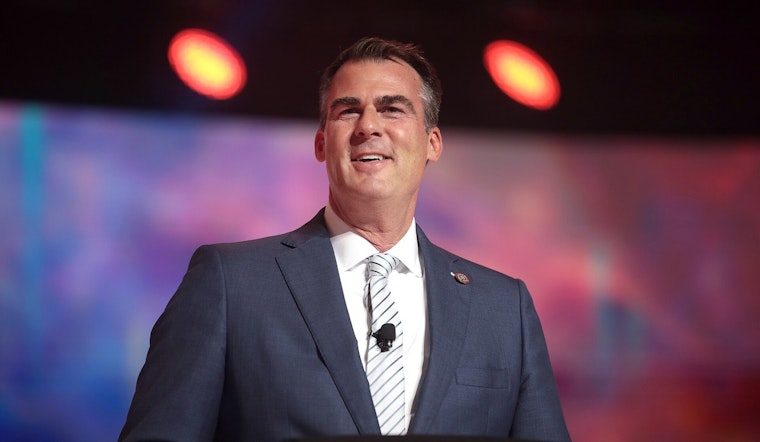
Gov. Kevin Stitt has thrown Oklahoma’s public-television future into limbo, vetoing a bill that would have extended the legal life of the Oklahoma Educational Television Authority, the state’s public TV network. Stitt returned the enrolled measure on May 5, 2026, leaving OETA’s current July 1, 2026, sunset date untouched. Overnight, a routine reauthorization turned into a scramble over money, emergency alerts and who, exactly, will hold the state’s broadcast authority if lawmakers stall out.
What the veto changed
Senate Bill 1461 had cleared both chambers and was written to push OETA’s statutory termination date far into the future. The enrolled bill replaces the present sunset with July 1, 2036, according to the Oklahoma Legislature. Legislative records show the measure was sent to the governor on April 29 and marked “Vetoed 05/05/2026.” Backers treated SB 1461 as a routine housecleaning move to keep the authority alive; critics argued the deeper question was whether state tax dollars should be tied up in running a broadcast network at all.
Stitt’s reasoning
In a message reported by local media, Stitt made it clear he does not think taxpayers should be footing the bill for a TV station. He wrote that “Oklahoma should let viewers and advertisers fund OETA, not Oklahoma taxpayers,” according to Oklahoma Voice. The governor has repeatedly questioned where public broadcasting fits in a crowded, modern media landscape, and his office has pointed to private donations and underwriting, rather than general revenue, as the preferred way to pay for programming. At the time the legislative record reflected the veto, no separate veto packet had been posted on the state website.
OETA’s reach and public-safety role
OETA says more than 650,000 Oklahomans tune in to its channels each week and that it operates a web of transmitters and translators that blankets the state, according to OETA. The state’s FY2027 Budget Performance Review lists about $2.85 million in general-revenue appropriations for the authority and stresses that OETA’s technical backbone provides the only statewide broadcast path for some emergency messages and alerts, a function public-safety officials have flagged as uniquely important for rural counties, per the FY2027 Budget Performance Review. Supporters warn that those towers, along with the WARN (Warning, Alert and Response Network) capability, would be expensive and logistically tough to replace if OETA’s statutory authority is allowed to lapse.
Reaction and what comes next
Tribal leaders and station supporters wasted little time blasting the decision. Cherokee Nation Principal Chief Chuck Hoskin Jr. called the veto one that “would effectively destroy public television in our state,” according to Oklahoma Voice. At the same time, another measure is waiting in the wings: House Bill 3320, an enrolled bill that would strip sunset dates from a long list of agencies, including the Oklahoma Educational Television Authority. The bill summary names OETA as one of the entities affected, according to the summary on the Legislature’s site. Lawmakers now have a tight window to decide whether to override Stitt’s veto, tuck reauthorization language into another bill, or hunt for a different funding or governance model before the July 1 statutory deadline hits.
Bottom line
Stitt’s veto keeps a long-running fight alive over whether public broadcasting should live on the state payroll or survive strictly on viewers, grants and underwriters. For OETA employees, public-safety officials and the hundreds of thousands of Oklahomans who tune in each week, the question is far less abstract: will the state move fast enough to keep those statewide transmitters humming and the programming on the air?




.jpg)