

























































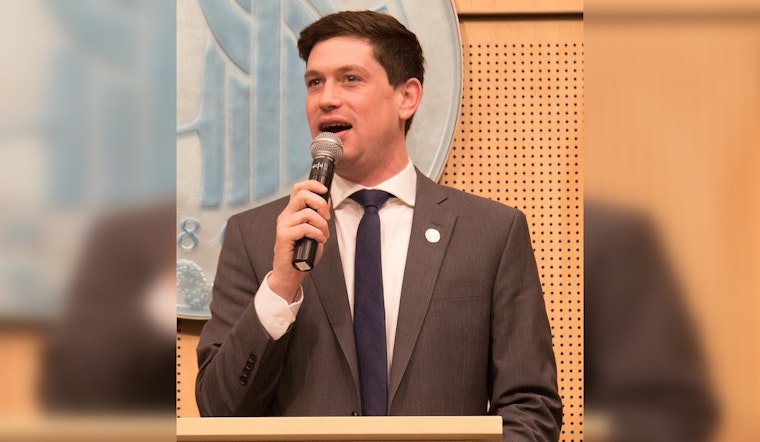
Seattle City Councilmember Dan Strauss is back in the middle of the long‑running fight over how Sound Transit should bring light rail to Ballard, floating a last‑minute change that would reshuffle billions of dollars just days before a crucial ST3 vote. His proposal, unveiled May 25 as the Sound Transit board moves toward updating the ST3 plan, would divert North King County funding away from the SoDo–Seattle Center tunnel segment and instead bankroll a Westlake–Ballard “starter line.” The bigger downtown tunnel would stay in the plan, but with its future far less certain, reviving the same set of tradeoffs that have divided boardmembers, advocates and Ballard residents for months.
Strauss outlined his amendment to The Urbanist, saying it would “shift the North King County dollars ... from SoDo to Seattle Center, and reallocating them to Westlake to Ballard,” while “the remaining of the $7 billion of regional funds would still be allocated to the downtown tunnel.” As summarized by The Urbanist, the change would set up a Ballard “starter line” between Westlake and Ballard and leave the full second downtown tunnel only partially funded.
Separately, Sound Transit staff have offered a substitute resolution that would revise the ST3 program to match current financial realities. Sound Transit lists the package, Resolution R2026‑11 and its supporting reports, on the May 28 board agenda. Attachments to the resolution show the agency would move ahead with planning and final design for a Ballard Link initial segment that reaches Seattle Center, while classifying construction of the Seattle Center–Ballard piece as “not currently affordable.”
How the switch would change Ballard service
Internal agency work that fed into the Enterprise Initiative evaluated ways to reach Ballard without building a brand‑new downtown tunnel all at once. One early staff estimate, cited in coverage, suggested that a Ballard extension without a second Downtown Seattle Transit Tunnel could trim several billion dollars off the baseline cost. The Urbanist reports that Sound Transit staff estimated options that avoid the full second downtown tunnel might save more than $4 billion in 2025 dollars. Staff and several boardmembers, however, caution that those savings may come packaged with tougher transfers, more operational complexity and a longer stretch of time in which other extensions, such as West Seattle, would run as stub lines.
Local backlash and politics
In Ballard, residents and transit advocates have been organizing hard to keep the full extension all the way to Market Street. A May 11 town hall hosted by Strauss, along with a series of neighborhood rallies, has become a focal point for frustration from riders who want the promised terminus delivered. Local reporting and community groups point to corridor ridership projections, reported in neighborhood outlets, in the roughly 90,000‑to‑mid‑100,000s daily range for a full SoDo‑to‑Ballard line. Advocates lean on those numbers to claim that cutting the project short would weaken the region’s overall ridership case, and neighborhood outlets and blogs such as Seattle Transit Blog have been highlighting those figures in recent weeks.
What comes next
The Sound Transit board is slated to vote on the ST3 update at its May 28 meeting in Union Station’s Ruth Fisher Board Room. Resolution R2026‑11 would also instruct the agency to adopt an “adaptive program management” strategy that seeks additional cost savings, chases more grant funding and delivers quarterly progress reports. If the board signs off, the plan would keep the door open to eventually finishing the second downtown tunnel, while stripping out firm construction timelines for parts of Ballard Link until new funding or savings are identified.
Backers of Strauss’s amendment frame it as a pragmatic way to get real light rail service to Ballard sooner while keeping some tunnel money in reserve. Critics counter that phasing the work and deferring pieces of the project risks breaking faith with voters who signed off on ST3 in 2016. With the vote just days away, regional leaders face a choice between leaning into a more affordable, phased rollout or sticking more closely to the original sequencing and timelines that were sold to the public.





.jpg)