

























































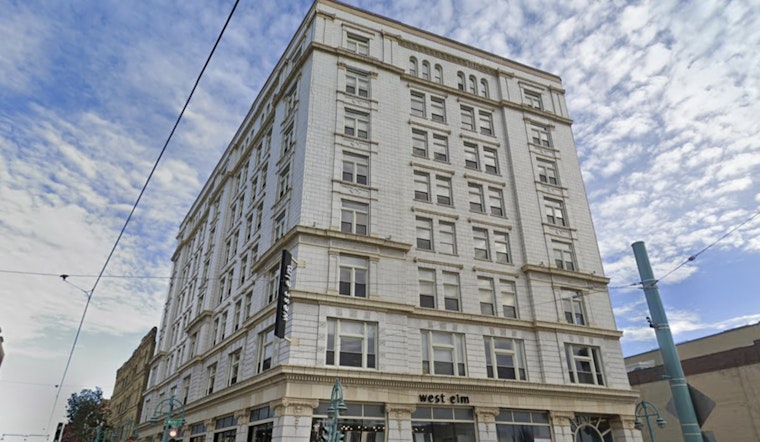
Another historic Third Ward heavyweight is shedding its office past in favor of more downtown living. Pieper Properties has filed plans to turn the top two floors of the Mayer Building at 342 N. Water St. into 25 apartments, a move that would nearly complete a long-running transformation from offices to housing in the 126-year-old, terra-cotta-clad landmark.
Permit filing and scope
According to Urban Milwaukee, Pieper Properties’ recent permit filing lists Engberg Anderson as the designer and Berghammer Construction Corporation as the general contractor, with an estimated project cost of $3.9 million. Urban Milwaukee also reports that Pieper owner Ann Pieper Eisenbrown declined to comment in a May 20 email, saying the plans are still being worked out.
What’s already in the building
A Transwestern listing on LoopNet shows how mixed-use the Mayer has already become. West Elm occupies the first floor, while Regus operates on the sixth floor. The same listing markets apartments on the second through fifth floors, reflecting the building’s gradual shift from traditional office space to a blend of retail, flexible workspace and housing.
A century of change
The Mayer is a white, terra-cotta-clad building designed by H. P. Schnetzky & Son and first built around 1910, with its top four floors added in stages between 1915 and 1926. The Wisconsin Historical Society notes that the structure originally housed the F. Mayer Boot & Shoe Co. and later served federal agencies after World War II, a layered history that helps explain its landmark status in the Third Ward.
Owner and the conversion story
Pieper Properties has owned the Mayer for more than two decades and lists it on the company’s portfolio page. The developer began converting lower levels to apartments in 2014, and the new permit would turn the top two floors into 25 additional units, as Urban Milwaukee reports. That reporting also notes that longtime office tenants such as Rite-Hite and Cohen & Co. have relocated in recent years, while Frontier Title continues to lease space on the eighth floor.
What it means for the Third Ward
The latest filing lines up neatly with a broader neighborhood pattern of adaptive reuse and infill that local planning documents and the Historic Third Ward Business Improvement District have been pushing for years. The BID’s 2025 operating plan, posted on Milwaukee Legistar, stresses rehabilitation and adaptive reuse as a strategy to preserve the area’s historic warehouse fabric while adding housing and commercial vitality.
The permit filing does not spell out a construction timeline or a public leasing schedule, and Pieper has indicated that key details remain in development. For now, the proposal stands as one more chapter in the Third Ward’s slow but steady remake from early 20th century warehouses into a 21st century mix of retail, offices and downtown housing.





