

























































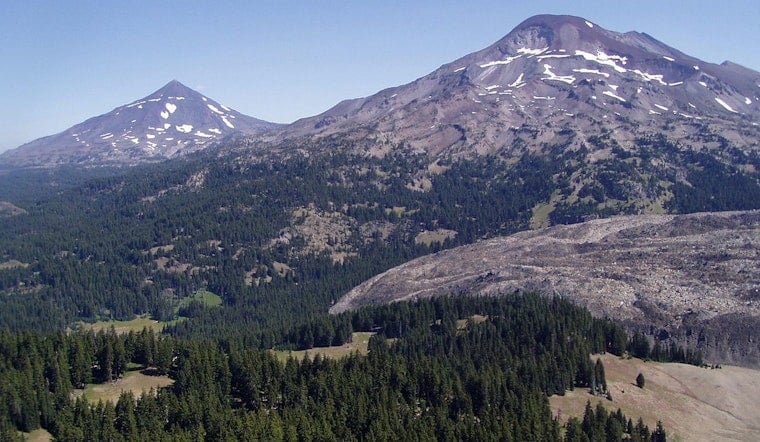
A flurry of viral TikToks and other short-form clips is painting a doomsday picture of the Three Sisters volcanic cluster in central Oregon, claiming the area has "cracked open" and that roughly 213,000 people are sitting in a "volcanic death zone." The videos urge people in Bend and Sisters to brace for a giant blast and grab‑and‑go evacuations. Scientists and emergency managers say the posts are getting the monitoring story backward: the volcanoes are being watched more closely, not gearing up for a surprise cataclysm.
What Scientists Are Actually Seeing
Instruments around South Sister have picked up slow, on-and-off ground uplift and clusters of tiny earthquakes, the same broad bulge first detected by satellite radar around 2001 that showed up again from 2020 to 2022. Jon Major, the scientist in charge at the USGS Cascades Volcano Observatory, told OPB the signals most likely reflect small pulses of magma several miles underground and that "there's no imminent threat." The blips are enough to keep volcanologists paying attention, but they are not the sharp, intense bursts of activity that tend to precede explosive eruptions.
How Three Sisters Rank On The Danger Scale
The U.S. Geological Survey classifies Three Sisters as a "very high" threat volcano under the National Volcano Early Warning System. That label means the volcanoes deserve strong, ongoing monitoring because of what they could do and who lives nearby, not that an eruption is expected any day. On the NVEWS list, Three Sisters sits alongside Mount Hood, Newberry and Crater Lake as Oregon volcanoes that get top-tier attention from federal scientists. That ranking helps decide where monitoring gear and staff time go and explains why experts are tracking recent changes closely, according to USGS.
What An Eruption Could Do And How You Would Hear About It First
USGS hazard assessments show that an eruption from South Sister could produce tephra fall, pyroclastic flows, lava flows, lahars and secondary flooding or landslides, with the specific mix depending on how big the eruption is and which way the wind is blowing. As the agency notes in an information statement, "an eruption would likely be preceded by detectable and more vigorous earthquakes, ground movement (deformation), and geochemical changes," and those stronger warning signs are not happening now. In practical terms, USGS says it would probably be able to issue advance notice if magma started pushing toward the surface. USGS explains the monitoring picture in more detail.
Why That 213,000 Number Is Misleading
The viral clips seized on a figure of about 213,000 people and spun it as a headcount for a "death zone." That framing mixes up planning tools with predictions, according to OregonLive. The outlet reports that roughly 200,000 Oregonians live in counties that could be touched by some volcanic hazards in certain worst‑case scenarios, but those numbers are used by emergency managers to map out exposure and response, not to forecast that everyone in those areas would die. Researchers and officials say the useful message is to be prepared, not terrified.
What Locals Should Actually Do
Emergency officials recommend signing up for county alert systems, keeping a basic go-bag or emergency kit, and reviewing evacuation routes laid out in state planning documents for the Central Cascades. The Oregon Office of Emergency Management and local county websites host guidance and scenario maps for volcanic hazards that are far more practical than anything in a 30-second panic video. For people who want to keep closer tabs on what the instruments are seeing, local emergency managers and the Pacific Northwest Seismic Network's regional pages at PNSN and county emergency sites provide regular updates.
The upshot: Three Sisters is a serious volcano that deserves attention, but the "caldera cracks open" TikToks are overselling the immediate risk. USGS and regional partners continue to track ground movement and earthquakes and will issue alerts if conditions change. For now, people in central Oregon are better served by official updates and local emergency plans than by social-media worst-case storytelling.





