

























































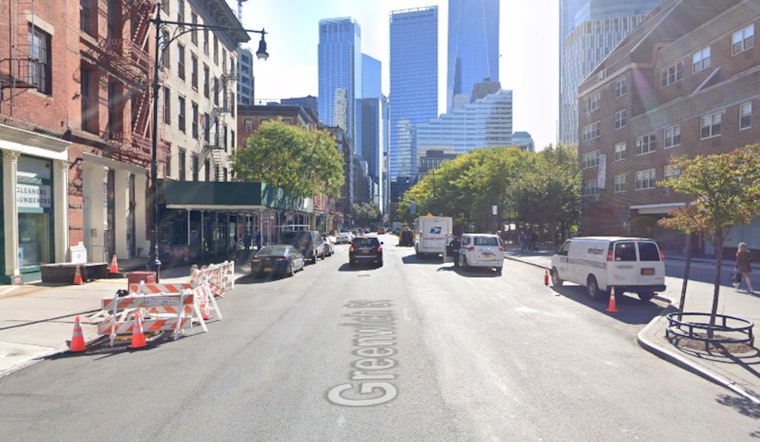
Tribeca’s skyline could be in for a jolt. Vornado Realty Trust and Stellar Management have quietly turned up the volume at Independence Plaza, filing formal plans for a 72-story tower that would tack roughly 976 new apartments onto the complex. The already-massive campus holds about 1,328 units across three 39-story buildings, so this is not a subtle expansion. The filing also kicks off a full-blown city environmental review, and neighbors are already bracing for what they say could be years of noise, dust and disruption that would reshape the block.
According to Commercial Observer, the joint venture has submitted an Environmental Assessment Statement to the Department of City Planning for the portion of the site around 310 Greenwich Street. The developers are asking to tweak the existing Large-Scale Residential Development plan so they can max out the residential floor area allowed under current zoning, without touching the zoning map itself. That move launches the city’s CEQR process and, if planners see potentially significant impacts, could escalate to a full Environmental Impact Statement with more scrutiny and more public theater.
PincusCo reports that the application sketches out two different affordability paths. In Scheme A, about 251 affordable units would sit inside the new tower. Scheme B would push those affordable units off-site somewhere else in Manhattan Community District 1 under the Universal Affordability Preference. The paperwork includes architectural massing studies and identifies Parcel 3C, the southern slice of the campus along Harrison and Greenwich Streets, as the likely construction zone. Laying out both options now is designed to keep the environmental review usable whether the affordable housing lands on-site or a few blocks away.
“We look forward to continuing to work with residents, neighbors and key stakeholders in the months ahead to ensure this project reflects the needs of both the city and the people that live and work here,” a project spokesperson said, as quoted by The Real Deal. The developers are framing the plan as a site-plan modification, not a zoning change, which would let them sidestep a full ULURP land-use review even as it advances through environmental review. Their filing also points to roughly $33 million in recent capital upgrades and a pledge of about $15 million in community benefits over the next two years as part of the pitch.
Community Pushback
Neighbors and tenant groups have not taken the news lying down. Packed meetings, petitions and calls to elected officials have already kicked off, according to the Tribeca Trib. At a community forum in March 2024 organized by Councilmember Christopher Marte, residents complained about the prospect of prolonged construction, dust and possible impacts on nearby historic townhouses. Tenant advocates argue the project would further speed Independence Plaza’s move away from its Mitchell-Lama origins and continue the erosion of below-market housing in a neighborhood where affordability is already hanging by a thread.
Behind the scenes, the ownership group has also retooled its balance sheet. Independence Plaza was refinanced last year with a $675 million commercial mortgage-backed securities loan package arranged by Newmark, according to a Newmark announcement. The new five-year debt replaces older, maturing loans and gives the joint venture more breathing room as it chases approvals for the expansion, with a syndicate of major banks signed on in the background.
The development team is also reminding officials that Independence Plaza is more than just towers and terraces. The complex already includes over 55,000 square feet of street-level retail and on-site amenities such as a fitness center, swimming pool, children’s playroom and laundry facilities, as noted by The Real Deal. Built under the Mitchell-Lama program, the property still contains a substantial number of rent-regulated or otherwise affordable units, which is exactly why adding a large chunk of new market-rate apartments is setting off alarms for some residents. The developers, for their part, say additional retail and streetscape improvements would help knit the superblock more tightly into the surrounding neighborhood.
Regulatory Path And What To Watch
The current application sets the formal clock in motion on the city’s CEQR process and, according to PincusCo, uses an analysis year of 2032. That timeline assumes approvals by the middle of 2027 and shovels in the ground in early 2028. If the Environmental Assessment Statement identifies significant impacts, the city would require a full Environmental Impact Statement, which in turn brings more public hearings, deeper technical studies and a bigger target for potential legal challenges. The views of Community Board 1, plus any lawsuits that question the project’s non-ULURP approach, could prove just as important to the schedule as the environmental paperwork itself.
What’s Next
With the Environmental Assessment Statement on file, city planners now have to decide whether an EIS is warranted and will lay out timelines for public comment and the release of technical studies, as Commercial Observer notes. Given the scale of a 72-story addition and the already energized local opposition, no one is expecting this to move quickly. Protracted hearings, a years-long gap between approvals and any ground-breaking, and a very public tug-of-war over Tribeca’s future all seem baked into the process. Project spokespeople say they will keep working with residents as the review unfolds, but the filings make clear that this expansion, if it happens, will arrive only after a long and closely watched fight.



