

























































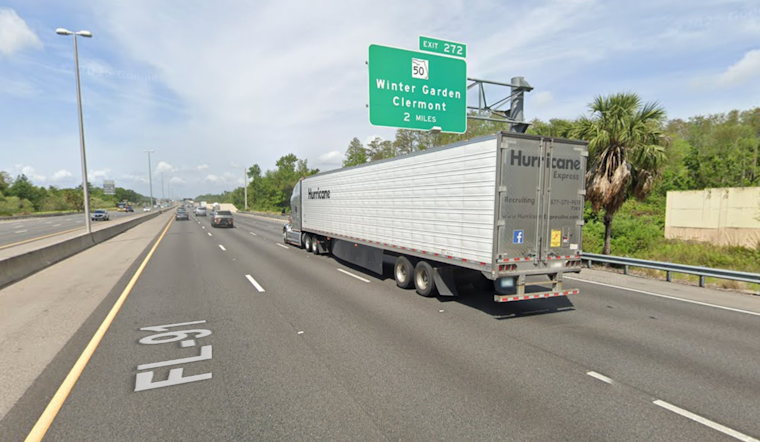
In Winter Garden’s Verde Park, what used to be the soundtrack of suburban calm now sounds a lot more like a truck stop. Neighbors say the recent widening of Florida’s Turnpike near mile markers 272 and 273 has turned once-quiet backyards into a near-constant roar, with some residents reporting vibrations and new cracks in their ceilings. Trees that used to buffer the highway were removed during construction, leaving homes directly exposed to heavy truck and commuter noise. After months of rumbling, homeowners say they want Florida’s Turnpike Enterprise to run a fresh post-construction sound study and reconsider noise barriers that could take the edge off.
What the project changed
The work is part of a years-long widening effort that covers the Turnpike from south of SR 408 to SR 50 (MP 263–273). Project maps show that noise walls were on the table during planning, according to Florida's Turnpike Enterprise. Contractor materials describe roughly 15,000 linear feet of planned noise-abatement wall tied to nearby interchange work, although many of those segments are labeled “potential,” pending further analysis and public input. Lane Construction outlines the mainline widening and interchange changes on its project page.
Why a wall isn't automatic
State rules make it clear that a wave of neighborhood complaints, on its own, does not guarantee a concrete sound wall. According to FDOT, a barrier is considered feasible only if at least two impacted receptors would get a 5 dB(A) noise reduction and the project meets a Noise Reduction Design Goal of about 7 dB(A) for at least one receptor. Cost, safety, right-of-way, and drainage constraints are also part of the calculation. Those technical and cost tests help explain why project documents can keep walls listed as “potential” even after major construction is wrapped up.
Neighbors demand another test
Homeowners say the sound study used to decide mitigation was completed years ago, before the expansion was finished and before many of the new houses were occupied. They argue that traffic patterns and sightlines are now very different and want measurements taken under current conditions, as reported by ClickOrlando. Residents urged officials to “just do another sound test” and say daytime truck and motorcycle traffic has made their yards practically unusable. Florida’s Turnpike Enterprise acknowledged ClickOrlando’s questions and told the station it was “working on a response,” but could not provide a statement before the deadline.
How residents can push for change
Neighbors who want a reassessment can submit comments to the project’s outreach team and specifically request a post-construction noise study. The PD&E project materials list public-hearing information and contact details for the MP 263–273 study. The outreach newsletter and contact packet from Florida's Turnpike Enterprise include those details and the named project manager. FDOT guidance also notes that the viewpoint of affected property owners factors into the reasonableness evaluation, so organized, well-documented resident input can influence whether a wall ultimately gets built.
Verde Park is far from alone. Other Central Florida neighborhoods near Turnpike work have complained of construction impacts such as dust, soot, and louder traffic during widening projects, highlighting how road expansion can shift neighborhood livability even as it aims to ease long-term congestion. Local reporting from other communities has documented those concerns and the need for post-construction follow-up in similar projects, including coverage from WFTV.





