

























































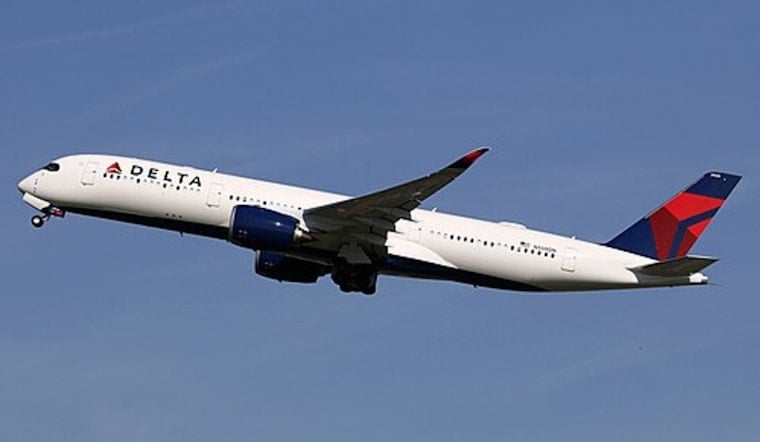
A Shanghai-bound Delta Air Lines flight out of Los Angeles made an unplanned stop in Seattle on Sunday after a passenger became so disruptive that the crew decided it was safer to land, leaving hundreds of travelers stuck overnight at Seattle-Tacoma International Airport. The crew had repeatedly warned the passenger while the plane was off the coast of northwest Washington before opting to divert. Once on the ground, passengers were asked to get off the aircraft and were held in the terminal while the airline scrambled to line up new travel plans and hotel rooms.
Delta identified the trip as Flight 39, operating an Airbus A350-900 with 271 customers, 11 flight attendants and four pilots aboard. The airline said local law enforcement met the aircraft at the gate, though it could not confirm what happened to the disruptive passenger after landing. Delta also told KOMO it expected the flight to continue on to Shanghai the following day, according to KOMO News.
Crew’s decision and passenger impact
Delta’s statement, quoted by KOMO News, said the crew diverted "for the safety of the aircraft and passenger." The airline told customers they would be spending the night in Seattle while staff worked on accommodations and rebooking. Some travelers reported long stretches of waiting at the gate as Delta tried to get the flight’s schedule back on track, turning what was supposed to be a transpacific trip into an unplanned Sea-Tac layover.
Federal law and FAA policy
Interfering with a flight crew is a federal crime under 49 U.S.C. § 46504 and can carry serious penalties, including up to 20 years in prison for severe assaults. See the statutory text as provided by Cornell Law School. The Federal Aviation Administration has kept a "zero tolerance" stance on unruly passengers, ramping up civil enforcement and referring the most serious cases to federal prosecutors, according to the agency’s guidance from the FAA.
How crews and airlines respond
When a passenger’s behavior raises safety concerns, flight crews typically head for the nearest suitable airport so law enforcement can meet the plane and deal with the situation on the ground. Delta’s published contingency and tarmac-delay rules outline how airport stations are supposed to coordinate care for customers and bring a plane off the runway within regulatory limits. See Delta for the airline’s procedural overview.
Delta did not immediately release more information about the passenger or whether any charges might follow. Local authorities at Sea-Tac handle law enforcement once a diverted flight is on the ground, and federal prosecutors can step in when interference rises to a serious level. This story will be updated if the airline or investigators share additional details.





.jpg)