

























































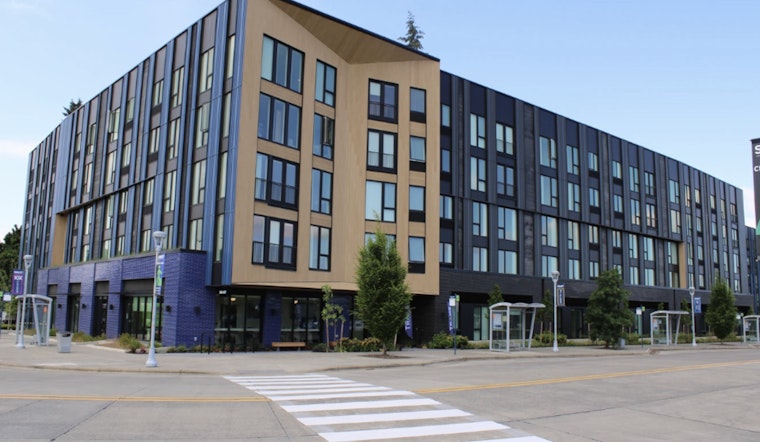
Wilsonville has officially cut the ribbon on Vuela, a five-story, 121-unit affordable housing complex perched right at the city’s transit center, where a permanent food bank, a transit welcome center and a commuter-facing food hall all share the ground floor. The project combines permanent supportive housing and on-site services with apartments restricted to households earning 30%, 60% and 80% of area median income, which city and county leaders are pitching as a direct link between lower-income residents, transit, services and nearby job centers.
Ground-floor services for neighbors and riders
According to Oregon Metro, Vuela’s street-level spaces now host Wilsonville Community Sharing, a SMART welcome center and a food hall and taproom aimed at both commuters and nearby residents. A $1.9 million legislative grant secured by Rep. Courtney Neron, her office says, helped pay for the food bank space and transit welcome area. The ribbon-cutting drew a full slate of elected officials from the state legislature, Metro and Clackamas County, along with local leaders keen to show off the new hub.
Public-private deal and funding
The parcel at the Wilsonville Transit Center was transferred to developer Palindrome for $1, and the city deferred roughly $1.4 million in system development charges to keep rents within reach, the City of Wilsonville reports. Construction pulled from several public funding streams, including $8 million from Metro’s affordable housing bond and a $250,000 transit-oriented development grant that local officials described as crucial to closing the financing gap. Palindrome president Robert Gibson said the firm is “proud to deliver Vuela in partnership with the city of Wilsonville, Clackamas County, Metro and the state,” according to Oregon Metro.
Who will live here and the services they’ll get
Clackamas County and project materials say Vuela’s 121 apartments are reserved for households earning between 30% and 80% of area median income, with units carved out for the lowest-income renters and 20 permanent supportive housing units that come with rent assistance and wraparound services. Latino Network is listed as the resident-services partner, tasked with culturally specific outreach and programming, while Metro’s Supportive Housing Services will help pay for case management for tenants who need it. Officials say putting a food bank and transit information center in the same building is meant to strip away practical obstacles to basic services for both neighbors and riders.
Design choices and transit access
Vuela sits directly next to the Wilsonville Transit Center and the WES commuter rail line, giving many residents a single-seat trip to regional job centers and schools, according to SMART planning materials. Design documents note that the project preserves three large Douglas-fir trees on the site and folds in efficiency features like rooftop solar panels and EV charging stations. Planners say the transit-oriented setup is intended to cut down on car dependence and make it easier for lower-income households to reach work.
What’s next for residents and the neighborhood
PacifiCap, the property manager for Vuela, began leasing in late 2025 and posts waitlist and move-in details on its leasing pages, with a waitlist link also available through county materials. City officials say programming and service schedules will roll out this summer as partners settle into their ground-floor spaces, and they expect Vuela to function both as new housing for vulnerable households and as a lively civic hub at the transit center. For the latest information on eligibility, waitlists and community events, residents are directed to PacifiCap’s leasing information along with city and county project pages.





