

























































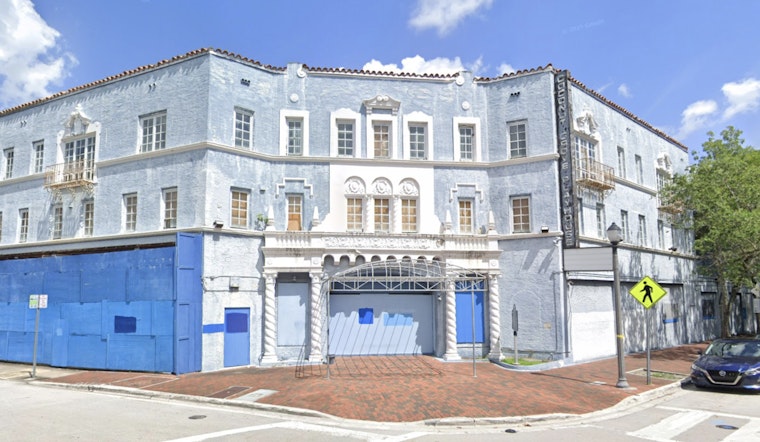
West Grove residents are lining up against Miami-Dade County’s vision for turning the Coconut Grove Playhouse into a mixed-use “cultural campus,” warning it will send commerce, noise and ride-share drop-offs spilling into their quiet residential blocks. Four neighborhood groups have circulated an open letter demanding a tree-lined buffer, a detailed traffic plan and a binding community benefits agreement that would lock in local jobs, discounted tickets and youth programs. The clash arrives just as the City of Miami Planning, Zoning and Appeals Board is set to take up the county’s application Wednesday at 6:30 p.m. at Miami City Hall.
What the county is proposing
The county’s blueprint keeps the historic 1926 facade of the Playhouse, then tucks a roughly 310-seat theater behind it. Around that, the plan layers in ground-floor retail, food-and-beverage space, about 30,600 square feet of office space, pedestrian promenades and an adjacent parking garage. County officials argue that the mix of parking revenue and commercial leases is crucial if the theater is going to operate without constant taxpayer subsidies. A project overview and timeline are posted by the county’s cultural affairs office, according to the Miami-Dade County Department of Cultural Affairs.
Why neighbors say the plan threatens the West Grove
The open letter comes from four local organizations: GRACE (Grove Rights and Community Equity), the Village West Homeowners and Tenants Association, the Ministerial Alliance and Preserve the West Grove. They argue that lining Charles, William and Thomas avenues with pedestrian promenades and storefronts will make the project feel like a “mini-mall” shoved up against single-family homes. “We feel that our communities are under threat,” Preserve the West Grove organizer Courtney Berrien told local reporters, as she pressed for a natural, tree-lined barrier and a full traffic study. The groups’ demands and the text of the open letter are detailed in reporting from Coconut Grove Spotlight.
Demolition, collapse and the site's recent troubles
The property has already seen its share of drama. In 2025, demolition work and a construction error triggered a partial collapse that forced temporary street closures and a pause on some Phase 1 activities. Engineers ordered emergency stabilization, and the county shifted to shoring up the historic front building while inspections and protective bracing were completed. Coverage of the collapse and the county’s stabilization efforts is available from CBS Miami.
PZAB hearing and the permit path
To move the project forward, Miami-Dade is asking the City of Miami’s Planning, Zoning and Appeals Board to grant several exceptions and zoning waivers, including higher lot coverage and less green space than normally required. City staff, after reviewing the application, have recommended approval. The board has placed the Playhouse item on its agenda for Wednesday night, giving residents a formal venue to air objections before any waivers are approved. Those procedural steps and the hearing schedule were outlined by WLRN.
Community demands and the "no wall" response
Residents argue that the county’s promise to “open” the Playhouse to the historically Black West Grove falls flat if the design sends commercial activity pouring directly onto nearby residential streets. They want protections written in before any ground is broken, not after. Miami-Dade Commissioner Raquel Regalado has countered that there should be access and “no wall” cutting the project off from the neighborhood. Neighbors respond that access is fine, as long as it comes with traffic mitigation and benefits tailored to long-time residents. Those back-and-forth positions and the organizations’ requests are chronicled in coverage by The Miami Times.
What happens next
If the Planning, Zoning and Appeals Board signs off on the requested waivers, county officials say the next steps will be applying for a building permit, putting the job out to bid and starting construction. Opponents, for their part, say they will keep pressing for a legally enforceable community benefits agreement, as reported by Coconut Grove Spotlight. Whatever is said on the record at Wednesday’s hearing is likely to frame the next round of negotiations between the county and West Grove groups.



