

























































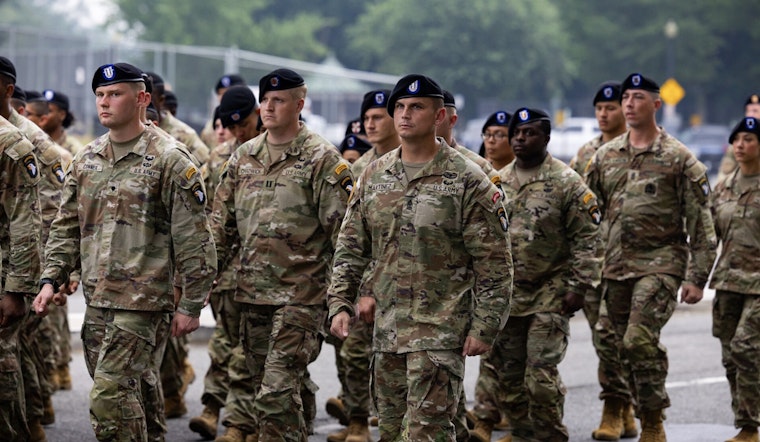
Defense Secretary Pete Hegseth delivered surprise news to the Class of 2026 at West Point on Saturday, telling the newly commissioned officers that the U.S. Army has already met its fiscal year 2026 recruiting goal four months ahead of schedule. He said the service has locked in contracts with more than 61,500 new soldiers, a milestone he framed as proof that a recent push on recruiting and "back‑to‑basics" priorities is paying off. The announcement comes as senior leaders weigh near‑term operations in the Middle East.
According to the U.S. Army, the service "signed contracts with more than 61,500 future Soldiers," meeting the FY26 accession mission well before the Sept. 30 cutoff. The official release credits "innovative outreach, enhanced career incentives and a focus on critical technical skills" and notes that the U.S. Army Recruiting Division, activated in August 2025 to concentrate on enlisted accessions, played a central role. Brig. Gen. Sara Dudley and Command Sgt. Maj. Danny Basham are quoted praising recruiters' efforts.
Hegseth's West Point Address
Speaking at Michie Stadium, Hegseth urged the new officers to focus on readiness and to "prioritize lethality over likability," pledging to "untie your hands" so commanders can make split-second decisions in combat, remarks that were posted by the Department of War. He also criticized what he described as the academy's past embrace of diversity programs and "anti‑American ideologies," telling cadets that "unity is our strength" as part of a broader argument against what he called politicized education on campus, a line reported by FOX 10 Phoenix. The speech included a reading from Isaiah 6:8 and linked the recruiting news to a plan to grow the Army next year, according to the public remarks.
Where The Numbers Came From
The early finish line follows a rebound that started in 2025, when the Army beat its 61,000 goal by signing about 62,050 recruits, according to Pentagon figures reported by Stars and Stripes. Analysts and service leaders point to shifts in outreach, enlistment incentives and screening policies, including a broader emphasis on technical skills and prep courses, as key drivers of the uptick. Observers say those changes have opened the door for arguments inside the Pentagon about responsibly increasing end‑strength if Congress funds the expansion.
Reactions And Concerns
Not everyone welcomed Hegseth's tone. Critics point to recent personnel shake‑ups and policy moves at the Pentagon as signs that the department's priorities have shifted under his leadership, and some worry that a partisan edge at service events risks politicizing the ranks. The Associated Press documented the removal of the Army's top uniformed officer earlier this spring, and outlets from The Daily Beast to local papers highlighted portions of the commencement for its partisan language.
For the Class of 2026, the impact is immediate and concrete. Newly commissioned lieutenants will be asked to train and lead the roughly 61,500 soldiers now on the books, and Army leaders say that hitting the accession goal early gives them room to pursue enlargement and capability investments next year, as reported by FOX 10 Phoenix. Whether those early sign‑ups turn into long‑term readiness gains will hinge on retention, training throughput and congressional funding, and those questions are likely to shape upcoming Capitol Hill votes on defense spending.





