

























































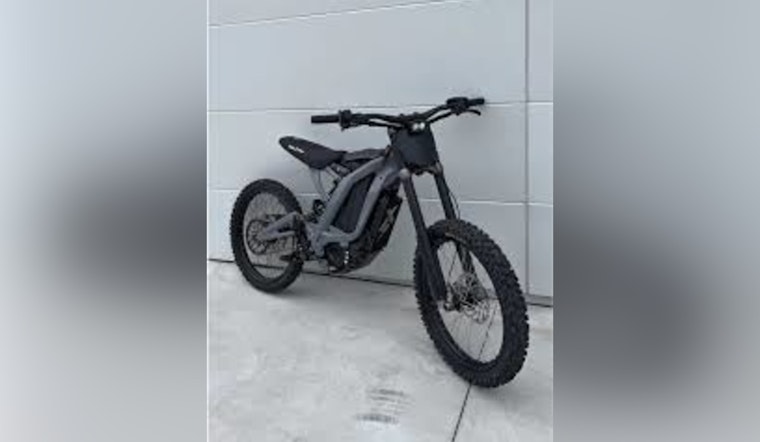
Winters police say a 13-year-old boy turned a high-powered electric motorcycle into his personal stunt bike, repeatedly taking off from officers and, in a separate incident, allegedly blasting a classmate in the eyes with a laser that left the victim in pain and with a migraine. Officers arrested the teen, booked him into Yolo County Juvenile Hall and said the e-motorcycle will be taken and sold.
In a social media post, the Winters Police Department called the machines dangerous and urged parents to stop treating them like harmless toys. According to The Sacramento Bee, the department warned in all caps, “THESE DEVICES ARE NOT TOYS!!!” and told families to pay close attention to what they are buying for their kids.
Arrest and charges
Officers say the teen had slipped away from them several times over recent weeks, at one point lifting the front wheel and “popping a wheelie” right past an officer before taking off at high speed, according to CBS Sacramento. The outlet reported that after he was picked up, the youth was booked into Yolo County Juvenile Hall on a felony count of evading police, along with misdemeanor allegations tied to reckless driving and the reported laser incident.
Bike seized and police response
The Sacramento Bee reported that investigators discovered the e-motorcycle had been dropped off at a local bike repair shop, then arranged with the boy’s parents to meet before making the arrest on Wednesday evening. According to the Bee, officers said the bike could go from a standstill to roughly 31 mph in just 2.7 seconds and reach about 49 mph at top speed, and they told the paper they intended to take the machine and “sell it immediately.”
What the law says
Under California law, there is a firm line between standard, street-legal electric bicycles and more powerful motorized bikes, and that line controls whether a rider needs a motorcycle license and registration. Vehicle Code §312.5 lays out the rules for Class 1 through 3 e-bikes and specifies that anything exceeding 750 watts or capable of higher speeds on motor power alone does not qualify as an electric bicycle. Operating those more powerful motorcycles or motorized bicycles on public roads generally requires the proper license or endorsement, as explained in §12500.
Where this fits in a statewide pattern
The Winters case lands amid a broader crackdown on high-speed e-moto crashes involving teens across California. The Los Angeles Times reported that an Orange County mother faces an involuntary manslaughter charge after her 14-year-old allegedly struck and killed an elderly man while riding an e-bike. The San Francisco Chronicle detailed a separate Contra Costa County case in which Benicia parents were charged with child abuse after their teenager crashed a Surron-style e-moto. Those high-profile prosecutions have helped spur tougher enforcement and fresh local rules aimed at keeping motorcycle-like electric bikes off streets and trails where kids and pedestrians are most exposed.
School and community response
According to Winters police, the Winters Joint Unified School District and other local leaders are backing the department’s plea for parents to take a hard look at what their children are riding and to assume that any powerful motorized bike is not a toy. CBS Sacramento reported that the teen’s parents cooperated with investigators and told officers they would sell the bike once they learned about the allegations.
Resources for parents
State officials point parents to tools that can help sort out what is legal and what is not. The California Highway Patrol offers a free Electric Bicycle Safety and Training course that teaches families how to spot illegal modifications, understand the different vehicle categories and cover basic safe-riding practices. The CHP also posts guidance on helmet rules and local regulations for various types of electric vehicles in its bike and pedestrian safety materials, available through the California Highway Patrol.





