

























































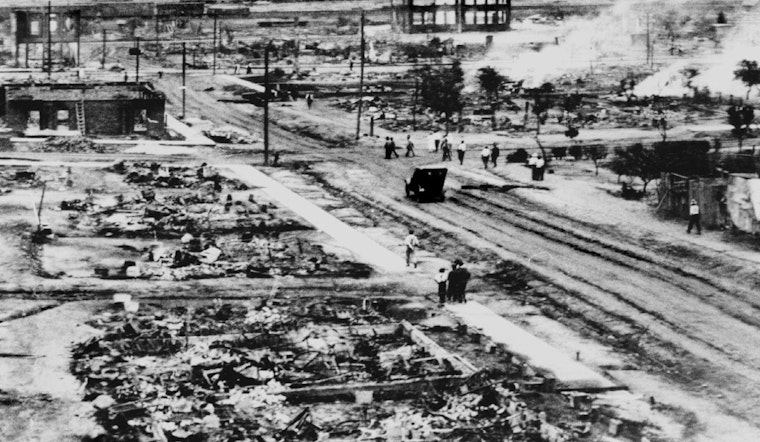
On Monday, June 1, 2026, Tulsa marked the 105th anniversary of the 1921 attack that leveled Greenwood, once known as Black Wall Street. Commemorations in the district unfolded alongside new announcements from archaeologists and genealogists working to identify remains and fresh political pressure to confront long-running harms. With the last eyewitnesses now gone or aging, descendants and civic leaders say the work of memory and repair has moved into forensic labs, courtrooms and city planning offices.
What Happened in 1921
The assault began after an elevator incident on May 30, 1921, and erupted into roughly 18 hours of arson, gunfire and looting across May 31 and June 1. As documented by the Oklahoma Commission, about 35 city blocks and roughly 191 Black-owned businesses were destroyed, and thousands of residents were driven from their homes. The commission’s report and contemporaneous accounts also record eyewitness claims of planes overhead and a telegram that summoned the National Guard by special train.
Survivors and the Legal Fight
The generation that lived through Greenwood is now almost gone. Hughes Van Ellis died in October 2023 and Viola Ford Fletcher died in November 2025, leaving Lessie Benningfield Randle as the last known survivor with living memory of the massacre. Survivors and descendants waged a long legal campaign for reparations, but the Oklahoma Supreme Court dismissed their suit in June 2024, a ruling advocates say shifted the fight into political and private channels. As The Associated Press reported, survivors have turned to advocacy, public records releases and private philanthropy after courts declined to provide the remedy they sought.
Digging Up the Past
Tulsa’s multiyear Graves Investigation at Oaklawn Cemetery has exhumed and analyzed dozens of burials, with experts using DNA and genealogical tools to develop leads and identify people who were buried without markers. Officials announced the first identification from the project, C. L. Daniel, a World War I veteran, in July 2024. Subsequent updates from the city and lab partners have named additional individuals and released genealogical leads, according to CNN (KVIA) and the City of Tulsa. City releases say the work is meant to bring closure to families and more fully document who was lost.
Mayor's Road to Repair
On June 1, 2025, Mayor Monroe Nichols unveiled a "Road to Repair" that centers on a privately capitalized Greenwood Trust with a target of roughly $105 million to invest in housing, cultural preservation and economic development in North Tulsa. The proposal and its broad priorities were outlined by The Associated Press and in the mayor’s plan document, which also notes budget requests to continue the Oaklawn excavations and the genealogy project. City leaders describe the Trust as a way to fund place-based repair without direct city cash payouts to descendants.
Why It Still Matters
A federal review under the Emmett Till Unsolved Civil Rights Crimes Act examined the massacre and its aftermath but concluded that prosecution is largely foreclosed by the passage of time and legal barriers. The Justice Department’s published findings and the city’s forensic work together have shifted focus toward identification, memorialization and material programs intended to offset generational harm. That mix of forensic evidence, archival research and civic planning is why descendants and historians say the anniversary remains a time both to mourn and to press for concrete change. The record of denied insurance claims, urban planning decisions and unequal investment that followed the violence still shapes Tulsa today.
Remembrance and Next Steps
Monday’s events ranged from candlelit vigils to community genealogy workshops and public briefings on the Oaklawn work, reflecting a blend of grief, determination and close public scrutiny. Local coverage by KOCO and KJRH highlighted both the new identifications and the debate over how the Greenwood Trust and other programs should be structured in the months ahead.





