

























































A preliminary economic-impact study has Austin-Bergstrom International Airport on track to generate more than $13 billion in total economic output in 2026, airport officials said Thursday as they celebrated thousands of workers and partners. If that projection holds, it would mark a sizable jump from earlier benchmarks and highlight how the airport’s rapid expansion is reshaping Austin’s economy.
The impact of their work extends far beyond the terminal: initial projections from an economic impact study estimate AUS will contribute more than $13 billion in total economic output in 2026.
— Austin-Bergstrom International Airport (@AustinAirport) June 25, 2026
(3/4)
In a post from Austin-Bergstrom International Airport on X, the airport said the initial projection reflects its widening footprint and spotlighted an event honoring “8,000+ employees, tenants, contractors, airline partners, government agency staff, and service providers.” The airport did not release a full report with the post, describing the figure as an early projection and saying more details are coming.
How the new estimate compares to earlier benchmarks
According to the Texas Department of Transportation 2018 Texas Aviation Economic Impact Study, AUS generated about $7.6 billion in total economic output and supported roughly 74,000 direct and indirect jobs. That analysis relied on 2017 data and standard input-output modeling, so if the new projection uses a similar approach, it would represent a substantial increase in airport-driven activity.
Expansion and passenger growth are likely drivers
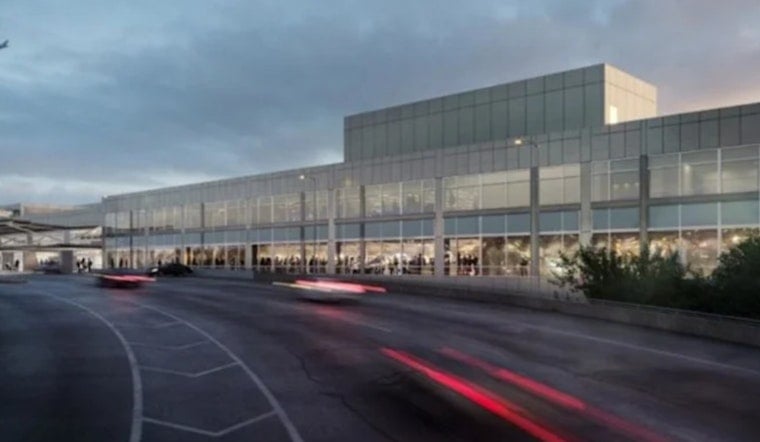
Airport leaders and local reporting point to a surge of capital projects and airline agreements as the likely fuel behind the jump. AUS is in the middle of its “Journey With AUS” program, which includes new taxiways, a parking garage, and planned gate increases.
As reported in coverage of historic airline agreements and outlined on the City of Austin’s site, those projects could channel roughly $5 billion into construction and future operations, boosting short-term spending and long-term capacity.
What it means for workers and local businesses
The airport’s social post said it honored more than 8,000 people tied to daily operations and construction, a figure that underscores the on-site workforce but does not match the broader metric used in statewide economic studies. That distinction matters because TxDOT-style analyses tally direct, indirect, and induced impacts across hotels, restaurants, freight operations, and supplier networks, which typically produce job and output totals that are much larger than a simple headcount at the airport.
What to watch next
Key details will hinge on the full economic-impact report and upcoming city briefings, which should spell out the methodology and clarify whether the $13 billion number includes direct activity only, construction-phase spending, induced spending, or all of the above. The City of Austin typically posts airport reports and project updates on its website, and the full study and supporting materials are expected to appear there once released.
For now, the $13 billion projection offers a rough sense of the scale of airport-driven growth, and over the long haul, it could influence hiring, construction, and business decisions in southeast Austin. We will update this story when the full report is published and city officials release the study’s methodology.



