

























































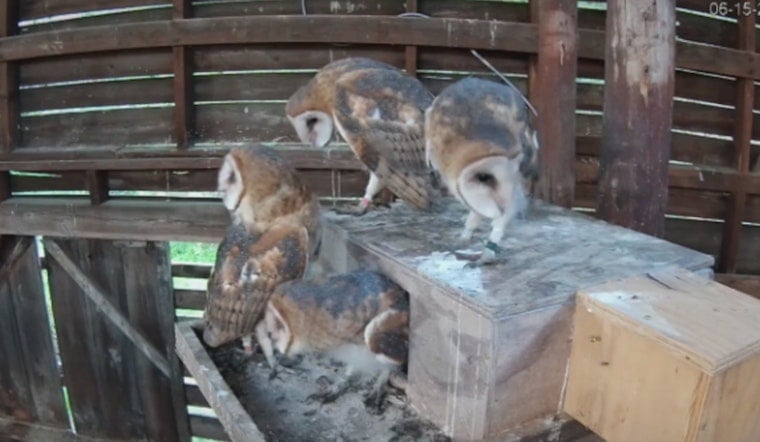
A quietly viral barn owl livestream in western North Carolina took a grim turn this week when one of the juvenile owls, a favorite of late-night viewers, was killed during a sudden midnight attack inside the barn. The camera captured a larger raptor swooping into the structure, a brief and violent struggle, and the aftermath that left one young bird dead as stunned viewers watched in real time while wildlife staff later confirmed the loss.
In a special update posted yesterday, the N.C. Wildlife Resources Commission reported that a great horned owl slipped into the barn around midnight and killed one of the owlets. Staff said the camera also caught the predator tangling with the adult female on top of the nest box. “This is an extremely rare encounter to capture on camera,” the commission wrote, adding that as shocking as it looked on screen, this kind of raptor-on-raptor conflict is a natural part of life in the wild.
Earlier losses in the nest
According to the Charlotte Observer, the nest did not start out unscathed. It originally held six eggs, but one never hatched and another owlet died on May 27. The paper reports that the current brood consists of four youngsters three females and one male in a remote western North Carolina barn that has become an unlikely global stage.
Biologists: ‘Owl-eat-owl’ world and no rescue plan
The commission notes that great horned owls are top predators of barn owls, and staff say they will not step in to stop these interactions. In bi-weekly updates, NCWRC has pointed to things like sibling competition, malnutrition and drought-driven prey shortages as possible reasons for the earlier losses. Officials stress that the whole point of the live cam is to observe and learn from natural behavior, not to turn a wild nest into a managed exhibit.
Why everyone was watching
The project has attracted far more than a handful of hardcore birders. The owl cam has drawn an international audience, with more than 62,000 people tuning in to watch the April hatchings, according to WUNC. Night-vision views of the family offered unusually close looks at fledging behavior and nighttime parenting and turned into a wave of anxious comments and concern when the late-night attack unfolded on screen.
By a June 22 update, officials said the remaining owlets had already grown their flight feathers and had begun practicing short flights inside the barn. Biologists expect that the fledglings may start leaving the barn and trying to hunt on their own as early as July, according to the Charlotte Observer.





