

























































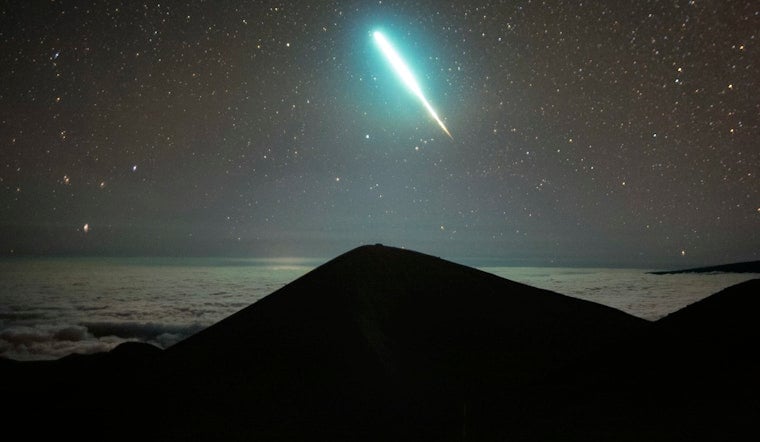
Just after 5 a.m. on Sunday, June 28, the quiet pre-dawn sky over Baton Rouge turned into a brief light show when a brilliant fireball ripped across the horizon. For a few seconds, the flash was bright enough to wash the darkness out for neighborhoods from south Louisiana into parts of Mississippi and eastern Texas, with startled residents and security cameras alike catching the spectacle.
Caught on camera
WAFB’s Sky9 camera network snagged multiple angles of the cosmic drive-by, with the sharpest view coming from the camera perched atop Our Lady of the Lake hospital in Baton Rouge. According to WAFB, several other Sky9 feeds showed a sudden, intense brightening of the pre-dawn sky, and early checks suggest the object did not survive its fiery plunge to reach the ground.
Where people saw it
The American Meteor Society logged about 48 eyewitness reports from across Louisiana, Mississippi, Alabama, Arkansas and Texas. Most of those reports cluster around 10:03 UTC, or roughly 5:03 a.m. CDT, lining up neatly with what the cameras caught. The AMS event page now features four video clips and a trail of location notes that help scientists trace the meteor’s flight path across the region.
What scientists will look for
Fireballs are the showboats of the meteor world: exceptionally bright streaks created when meter-scale chunks of space rock slam into Earth’s atmosphere at high speed. Nearly all of that material vaporizes long before it can hit the surface. To figure out what happened overhead, researchers lean on time-stamped video, ground-based sensors and government data to estimate how steeply the object came in, how fast it was moving and how much energy it released. Those measurements feed into tracking tools maintained in NASA/JPL’s CNEOS fireball database.
Witness reports and next steps
Local weather teams say some viewers described a “large, vibrant green ball” with a bright tail that ended in a sudden flash, according to WBRZ. Broadcasters have since aired viewer-submitted footage from spots including Denham Springs and St. Francisville, adding more puzzle pieces to the map.
Scientists are now asking anyone who caught the event on a doorbell cam, security system or phone to share what they have. People with time-stamped video or audio are encouraged to file a report with the American Meteor Society. With enough data points, analysts can better triangulate the meteor’s exact path and decide whether any recoverable fragments might be hiding somewhere on the ground, waiting for a very lucky find.





