

























































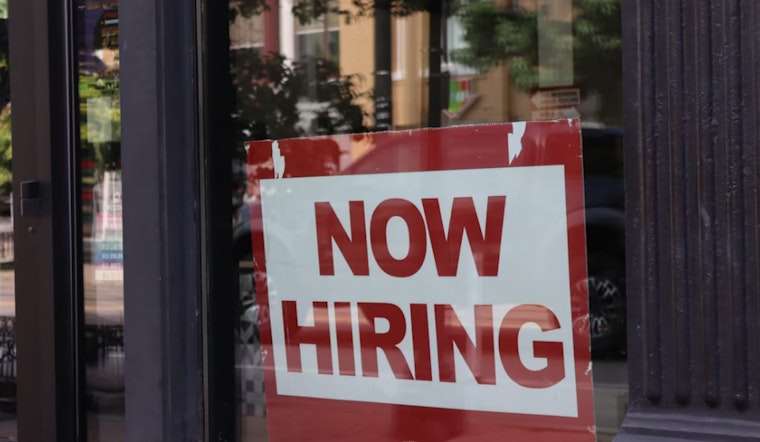
U.S. employers opened the taps on job postings in April, lifting advertised positions to about 7.6 million, even as actual hiring cooled. That split-screen labor story has economists and markets debating whether companies are window-shopping for talent while keeping a tight grip on the payroll budget. The tension between more vacancies and fewer new hires is muddying the outlook for wages, inflation and the Federal Reserve’s next move.
According to Bureau of Labor Statistics data, job openings jumped by 731,000 in April to 7.618 million, nudging the openings rate up to 4.6 percent. At the same time, hires fell by 419,000 to 5.116 million, pulling the hires rate down to 3.2 percent. Layoffs and discharges were little changed at roughly 1.7 million, about a 1.1 percent rate.
Reuters reported that openings are now at their highest level since May 2024, and noted that the mixed labor readings followed a government report showing inflation picked up in April. Economists polled by Reuters are looking for modest payroll gains in May, a combination that market watchers say could keep the Fed’s policy rate parked in the 3.50% to 3.75% range unless price pressures ease.
What’s behind the split?
The detailed JOLTS tables show that openings were far from evenly spread. Professional and business services did much of the heavy lifting, with vacancies there rising by 668,000, while finance and insurance actually saw openings decline by 135,000, according to the Bureau of Labor Statistics. Quits were little changed at about 3.0 million, and total separations slipped to roughly 5.0 million. That pairing suggests employers are holding on to the workers they already have even as some posted roles linger unfilled.
Analysts say this pattern of plenty of listings but slower gross hiring points to a cautious stance from employers: jobs are being posted, but hiring managers are taking their time and being choosier as costs and uncertainty creep higher. Reuters also highlighted that initial unemployment claims remain low, underscoring that overall slack in the labor market is still limited even with the cooler hiring pace.
What to watch next
The next big checkpoint arrives with the May employment report, set for Friday, June 5, 2026, when the BLS will release payroll figures, the unemployment rate and wage data. The Chicago Fed release calendar confirms the June 5 timing, and traders will be poring over payroll gains, joblessness and average hourly earnings to see whether the “open-but-not-hiring” pattern shows up there too.
For job seekers, the message is highly sector-specific: professional and business services and certain other niches are still posting plenty of openings, so targeted skills can carry real weight even as employers get more selective. For policymakers and markets, the tug-of-war between persistent vacancies and softer hiring means both the Fed and investors are likely to wait for a clearer signal from upcoming payroll and inflation data before shifting their bets.



