

























































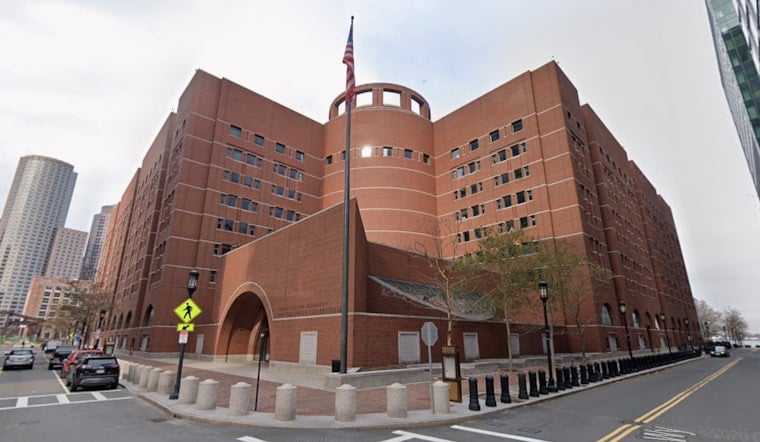
A federal judge in Boston has refused to toss most of a whistleblower complaint accusing Harvard University and a senior researcher of misusing National Institutes of Health grant money, setting up a long, uncomfortable look under the hood of one of the country’s most high-profile research hubs. The ruling keeps two False Claims Act counts alive and preserves allegations that Harvard Catalyst pulled in roughly $275 million in NIH awards while abandoning or repurposing promised work.
U.S. District Judge Myong J. Joun, in a 28-page order, rejected most of Harvard’s bid to shut the case down at the starting gate. Two claims, alleging false claims and false records, will move forward, while a reverse-false-claims count was dismissed. Judge Joun found the surviving counts detailed enough to clear the motion-to-dismiss hurdle and said factual disputes belong in discovery, not at this early stage. Both Bloomberg Law and The Harvard Crimson reported on the ruling.
What the suit says
The complaint, filed in March 2024 by David S. Zielinski, a former executive director of Harvard Catalyst, sat under seal until November 2025 while the Department of Justice kicked the tires on the allegations, according to a press release via PR Newswire. Brought as a qui tam action under the False Claims Act, the suit contends that Harvard Catalyst and its founder, Lee Nadler, secured roughly $275 million in NIH Clinical and Translational Science Awards starting in 2008, then allegedly abandoned or repurposed large portions of the research work that had been promised. Harvard Catalyst's website notes that the center oversees the university’s CTSA cooperative agreements.
What the judge said and key allegations
Zielinski’s complaint zeroes in on one 2018–2023 CTSA grant of roughly $93 million, alleging that 41 of 56 objectives were left unfinished and that 21 of those reportedly saw no work at all. It cites colleagues who said Nadler writes grants "to receive funding and then decides what to do with the money." Judge Joun wrote that Harvard’s pushback did not make those claims implausible and observed that "the very purpose of those statements is to keep NIH in the dark," a line that gives a sense of how seriously the court is taking the allegations. With the two counts allowed to advance, the university now has 14 days to answer. Zielinski’s attorneys said the ruling confirms their claims were pleaded with enough detail and that they are eager to proceed, while a Harvard spokesperson declined to comment, The Harvard Crimson reports.
Where this fits
The decision lands in the middle of a tense stretch for Harvard’s federal funding. In 2025, a separate ruling by U.S. District Judge Allison D. Burroughs forced the government to restore billions in previously frozen money, and federal agencies began notifying researchers of reinstated grants last fall, according to AP News. The broader tug of war over oversight and research integrity has already produced investigations and high-profile settlements involving Harvard-affiliated institutions. As Dana-Farber Cancer Institute agreed to a $15 million settlement last December, in a case tied to research-integrity allegations involving a Harvard-affiliated lab, the stakes for getting the science and the paperwork right have only grown more obvious.
Legal stakes
The lawsuit proceeds under the False Claims Act, a statute that lets the government seek treble damages and civil penalties when false or fraudulent claims are submitted to federal programs. It also allows private relators to file qui tam suits while the Department of Justice decides whether to intervene, which is why Zielinski’s complaint stayed under seal while DOJ weighed its options. Statutory details are spelled out in 31 U.S.C. § 3729, as published by Cornell Law School, and the Department of Justice has maintained a long-running enforcement role in healthcare and research fraud through its guidance and interagency working groups.
What’s next
With Judge Joun largely denying Harvard’s motion to dismiss, the case now heads toward an answer and full-blown discovery. That phase will put internal reports, annual progress narratives and email trails side by side with the complaint’s accusations. Zielinski’s lawyers say they are ready to push ahead, while Harvard faces a stretch of intense legal and public scrutiny as the litigation unfolds, according to PR Newswire.


