

























































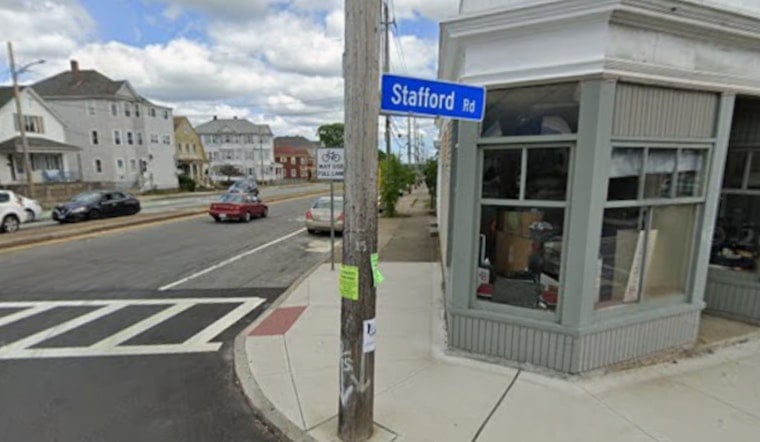
A false 911 call claiming an anonymous caller had killed their parents and was holding two children hostage sent Fall River's Emergency Services Unit racing to a Stafford Road home Saturday evening, only for officers to discover none of it was real. Police say the caller also threatened to harm the children if anyone entered the residence and threatened responding officers directly, prompting a full tactical response before the report was declared a hoax.
Officers responded to 322 Stafford Road around 6:30 p.m. Saturday after the anonymous call came in, according to Boston 25 News. The caller claimed two children were still alive inside the home even as the parents had allegedly been killed, a scenario designed to force officers into a high-risk entry. The Fall River Police Department activated its Emergency Services Unit and established a perimeter around the area while officers worked to verify what, if anything, was actually happening inside.
Once officers made contact with the residence, they found the reported killings and danger to children had not occurred, and investigators determined the report was a hoax. Police said there is no ongoing threat to the public, and authorities are now working to identify the person responsible for making the call. The investigation remains ongoing, per the same report.
Why Tactical Teams Can't Take Chances
Fall River's Emergency Services Unit is trained for exactly this kind of high-risk scenario — tactical entries, barricaded suspects, hostage negotiations, and perimeter containment — a specialization the department has maintained since it was founded in 1854, according to the City of Fall River Police Department. That obligation to treat every violent-crime report as real until officers can verify it firsthand is precisely what makes swatting calls so dangerous and so costly, according to Cornell Law School's Journal of Law and Public Policy. Federal law enforcement estimates a single tactical SWAT deployment with perimeter units can cost a municipality between $10,000 and $25,000 in diverted personnel, equipment, and administrative expenses, per Police1.
Fall River police said hoax emergency calls divert significant personnel and resources away from legitimate emergencies in the city, and they thanked area residents for their patience and cooperation during Saturday's response. In its public statement, the department warned that anyone who intentionally makes a false emergency report will be thoroughly investigated and prosecuted, and could be held financially accountable for the full cost of the response, according to the Fall River Reporter.
What State Law Allows Prosecutors to Pursue
Under Massachusetts General Laws Chapter 269, Section 14B, willfully communicating false information to a 911 dispatch center that results in an emergency response is punishable by up to 2.5 years in a house of correction or a $1,000 fine for a first offense, according to the Massachusetts Legislature. Repeat offenses can carry up to 10 years in state prison along with mandatory court-ordered restitution. It is not yet known whether federal agencies are assisting Fall River investigators, or what technology the caller may have used to mask their identity or location.
Swatting calls nationwide increasingly rely on spoofed numbers, voice-masking software, and virtual private networks that let callers obscure their location, according to the FBI's Internet Crime Complaint Center. The bureau launched a National Common Operation Picture Virtual Command Center in 2023, giving local, state, and federal agencies a shared database to track and cross-reference swatting calls across jurisdictions, per FedScoop. Data compiled by the K-12 School Shooting Database shows more than 700 swatting incidents were recorded at U.S. schools during the 2023–2024 academic year alone, according to Newsweek.
Fall River has faced coordinated hoax calls before: in March 2023, the city was among more than 14 Massachusetts and Rhode Island municipalities hit by a wave of fake active-shooter calls to local schools that triggered regional lockdowns. Federal prosecutors have also pursued swatting cases with serious consequences — in 2013, a man from Athol, Massachusetts was sentenced to 30 months in federal prison after pleading guilty to making interstate threats and false emergency calls that triggered SWAT responses in multiple states, according to the U.S. Department of Justice. For now, Fall River police say the Stafford Road case remains under investigation as they try to identify who made the call.





