

























































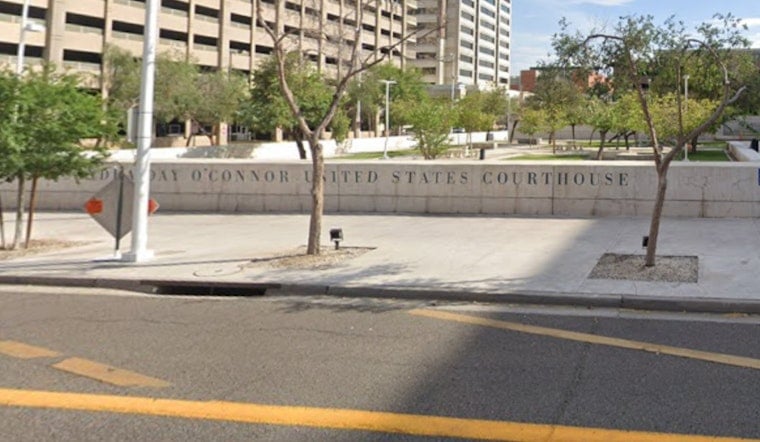
Jurors in Phoenix are weighing a disturbing question this week: Were a Casa Grande man’s handwritten court filings a serious request to kill the president, or the desperate paperwork of someone in deep mental crisis?
A U.S. marshal told the panel Thursday that defendant Rene Ortiz, now on trial for threatening the president, had made similar threats to federal prosecutors months earlier. Ortiz is accused of hand-delivering documents to federal courthouses that prosecutors say explicitly asked for permission to “execute the newly elected POTUS” with an M-16A2 rifle. The jury must now decide whether those filings were a criminal “true threat” or the ramblings of a man living with severe mental health issues.
How the filings entered the court record
According to court records, Ortiz first tried to file his paperwork at the Sandra Day O’Connor U.S. Courthouse in Phoenix on Nov. 5, 2024, then left similar documents at the Evo A. DeConcini courthouse in Tucson on Nov. 25, 2024. Prosecutors responded with a three-count superseding indictment that cites federal statutes barring threats against current and former presidents. As laid out in a written order from the U.S. District Court, the filings themselves are evidence in the case and helped the indictment survive a defense bid to toss the charges. U.S. District Court order.
What witnesses told jurors in Phoenix
Deputy Investigator Vladimir St. Louis testified that he first became involved with Ortiz in August 2024 and that Ortiz had previously made similar threats to the U.S. Attorney’s Office in central California, according to Courthouse News Service. Family members told jurors Ortiz had been spending “every waking minute” churning out legal filings and said his behavior worsened after he was fired from the Department of Veterans Affairs.
A licensed psychologist testified that Ortiz has schizoaffective disorder and borderline personality disorder. The defense leaned on those diagnoses to argue that whatever Ortiz wrote, it was not a concrete, credible plan to commit violence. Prosecutors countered that Ortiz knew exactly what he was doing when he prepared and delivered the documents, and argued that he was trying to draw attention to dozens of civil lawsuits he had already filed.
Secret Service interview and earlier reporting
Secret Service agents interviewed Ortiz on Dec. 5, 2024, and recorded that he admitted making the statements and warned he would act “if my demands are not met,” local reporting shows. Ortiz was arrested after agents reviewed both the filings and the interview. Earlier coverage details the language investigators say they found in the documents Ortiz tried to lodge at the courthouses. For reporting on the arrest, the filings, and what agents say Ortiz told them, see prior local coverage. AZFamily.
Charges and what they carry
Ortiz is charged under 18 U.S.C. § 871 and 18 U.S.C. § 879, federal statutes that make it a crime to threaten the President, the President-elect, or a former President. The court’s pretrial order walks through how the law defines “true threats” and explains why questions about a defendant’s intent and the seriousness of the threat usually go to a jury. The same document outlines the indictment and the judge’s reasoning on the key legal issues in the case. U.S. District Court order.
Where the trial stands
Defense attorneys rested Ortiz’s case Thursday afternoon, and prosecutors told jurors they plan to call one rebuttal witness when court resumes Monday, Courthouse News Service reports. After that, the lawyers are expected to deliver closing arguments, and the jury will decide whether Ortiz’s words clear the legal bar for a true threat. The trial continues this week in Phoenix.
Why it matters
Threats against national officials are federal crimes, and similar prosecutions in other parts of the country have ended in guilty verdicts, underscoring how seriously law enforcement treats speech that crosses into potential political violence. In one March 2026 case in Illinois, a federal jury convicted a suburban man of making what prosecutors called a true threat, a charge that carried a possible five-year maximum sentence. For additional context on how these cases are brought and tried, see the release from the U.S. Attorney’s Office. U.S. Department of Justice.





