

























































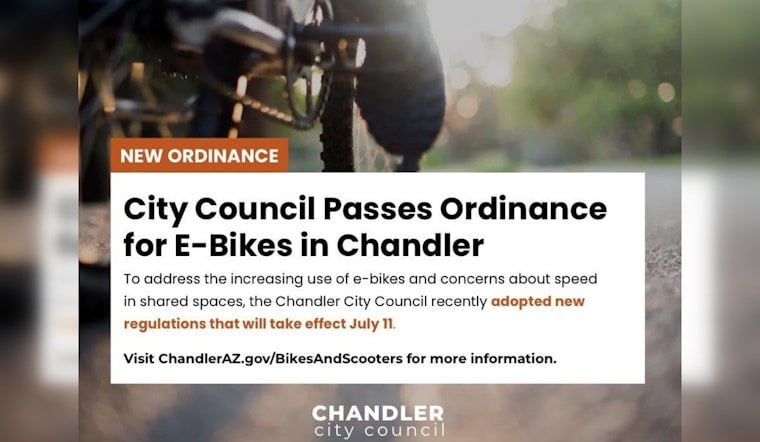
Chandler is hitting the brakes on its fastest electric bicycles, with a new city ordinance set to reshape where riders can go and how fast they can get there starting July 11, 2026. The rules, adopted by the Chandler City Council on June 11, clamp down hardest on Class 3 e-bikes, which will be barred from sidewalks, non-canal shared-use paths and city parks. Class 1 and 2 models will still be allowed in those spots, but with a 15 mph speed cap and a crawl-like 5 mph limit when passing pedestrians. The ordinance also requires helmets for riders under 18, sets a minimum age of 16 to operate Class 3 bikes, and mandates a front lamp and rear red reflector for night riding.
As first reported by Signals AZ, the measure was tentatively adopted at a May 21 council meeting after months of behind-the-scenes work. A council subcommittee began refining the proposal last October, with additional tweaks coming out of an April work session. Local coverage also noted that city leaders want a public-education push to roll out before officers start writing tickets.
What The Ordinance Requires
The city’s breakdown of the new rules spells out the basics clearly. Helmets are required for all riders under 18. Class 3 e-bikes are prohibited from sidewalks, shared-use paths that are not along canals, and city parks. Class 1 and 2 e-bikes can still use sidewalks and non-canal shared-use paths, but riders have to keep it at or under 15 mph, and drop to 5 mph when overtaking people on foot.
The rules also put a 16-year minimum age on operating Class 3 bikes. And for anyone riding after dark, a working front light and a rear red reflector remain mandatory, according to the City of Chandler. That lighting requirement tracks with state guidance from the Arizona Governor's Office of Highway Safety, which has long pushed basic visibility gear as a low-tech way to avoid high-speed trouble.
Why The City Acted
Council members say they have been hearing plenty from residents about high-speed e-bikes zipping through neighborhoods and crowding shared spaces, even though the city has not logged a big spike in reported crashes. Officials have framed the ordinance as a middle path: tighten up where and how fast people can ride without outright banning e-bikes from popular routes.
At the same time, regional reporting has documented a rise in serious micromobility injuries showing up at local trauma centers, including an e-bike crash wave hitting a Chandler hospital. State law treats electric bicycles much like traditional bikes, but leaves a lot of day-to-day operating details up to cities and towns under A.R.S. §28-819. That leeway helps explain why different Valley cities are now writing their own playbooks for where these fast-growing devices can go.
What Riders Should Do
The ordinance takes effect July 11, so riders have some time to get their gear and habits in line. That means checking that each e-bike is correctly labeled by class, making sure a front light and rear reflector are ready for night use, and keeping helmets on anyone under 18. Those on Class 3 bikes will need to rethink any sidewalk, park or non-canal shared-use path shortcuts.
For a full rundown of where different devices are allowed, along with additional safety tips and maps, the city directs residents to its online guide at Chandler's Bikes & Scooters page.





