

























































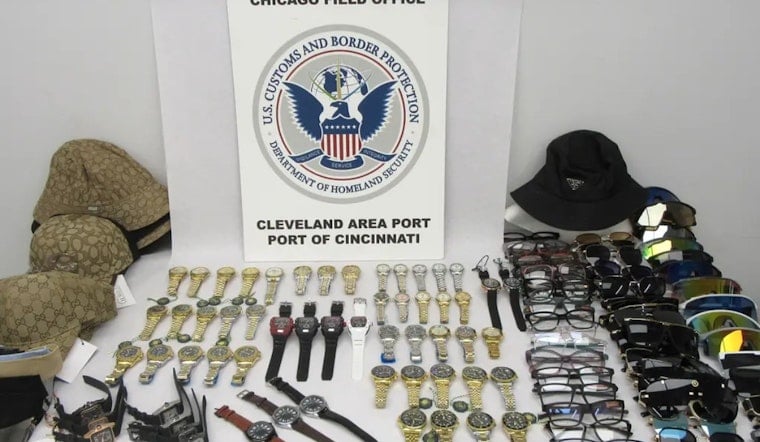
What started as another routine scan at the Port of Cincinnati turned into a luxury-label takedown on Thursday, when customs officers intercepted a parcel stuffed with 111 counterfeit items. Inside, inspectors found dozens of imitation watches and designer sunglasses that, if they had been authentic, would have been worth nearly $19.2 million. The shipment was flagged during standard checks at the inland mail hub and was headed to a residence in Puerto Rico, with watch styles tied to several high-end brands and a large batch of branded eyewear.
According to the New York Post, U.S. Customs and Border Protection officers tallied 44 watches modeled after Rolex designs, 10 Cartier-inspired timepieces, 4 Richard Mille-style watches, about 62 pairs of designer sunglasses, and roughly 20 branded hats. The report notes that the parcel originated in Colombia. The agency estimated the haul would have carried a retail price tag of more than $19.2 million if everything were real, and said the seized shipment was turned over to Homeland Security Investigations for further inquiry.
Why international mail hubs are a target
International mail centers have quietly become some of the busiest frontlines in the fight against knockoffs. According to U.S. Customs and Border Protection, mail environments account for the majority of intellectual property rights seizures nationwide. In its most recent trade data, the agency reported intercepting tens of millions of counterfeit items in fiscal year 2025, with an estimated retail value topping $7.3 billion.
Trade specialists at CBP's Centers of Excellence and Expertise work directly with brand owners to confirm whether suspicious goods are fake during parcel inspections. That collaboration helps inland hubs like Cincinnati zero in on high-risk shipments moving quietly through the system long before they ever hit a retail shelf or doorstep.
Not the first time Cincinnati has been in the crosshairs
This is not Cincinnati's first brush with big-ticket counterfeits. Local coverage documented a November seizure of roughly 52 counterfeit watches shipped from Colombia, with a combined manufacturer's suggested retail price of more than $6.3 million, as reported by WLWT. Those earlier busts reflect a familiar pattern, with high-end fakes flowing through inland logistics hubs before they can be rerouted to buyers or secondary distribution points.
Legal stakes for traffickers
For anyone behind shipments like this, the legal exposure is not small change. Trafficking in counterfeit goods is a federal crime, and under 18 U.S.C. § 2320, a first offense can bring up to 10 years in prison and fines of up to $2 million for an individual. Repeat violations or cases where someone is hurt can trigger even tougher penalties. On top of criminal charges, brand owners may pursue civil damages, and the federal government can permanently forfeit counterfeit shipments.
Homeland Security Investigations will continue examining the seized parcel, while CBP and port officials stress that everyday parcel screening at inland hubs remains a critical defense against counterfeit trade. The latest interception serves as a pointed reminder that those too-good-to-be-true prices on overseas marketplaces can come with serious legal risks and potential safety hazards for consumers.





