

























































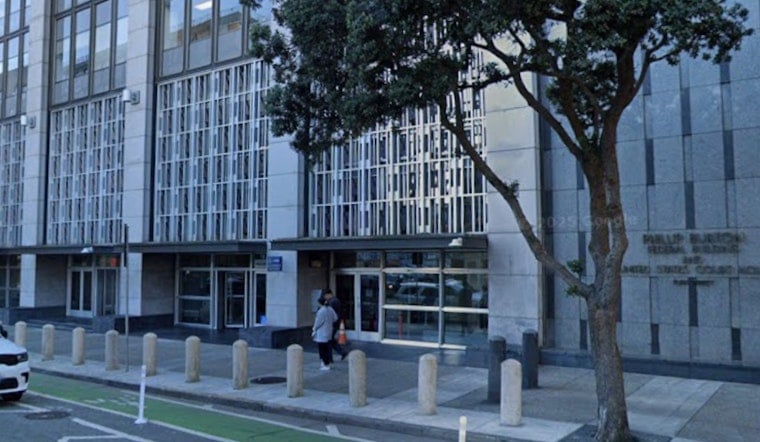
The simmering fight over what gun owners in Contra Costa County can actually carry on the street is now in federal court. Last Wednesday, the Second Amendment Foundation filed a lawsuit against Contra Costa County and Sheriff David Livingston, targeting local CCW rules that prohibit permit holders from carrying handguns equipped with red-dot optics, weapon-mounted lights, and certain single-action 1911-style pistols. The suit asks a federal judge to declare those policies unconstitutional and to halt their enforcement while the case plays out.
The case was filed in the U.S. District Court for the Northern District of California, Oakland Division, as Case No. 4:26-cv-05996. The plaintiffs are the Second Amendment Foundation and two Contra Costa CCW holders, who are seeking declaratory and injunctive relief under 42 U.S.C. § 1983, along with nominal damages and attorneys’ fees. According to the Complaint, they argue the county’s gear restrictions single out local residents and forbid features they describe as common and safety-enhancing on modern defensive handguns.
SAF characterizes Contra Costa’s approach as an outlier among issuing agencies nationwide and is pitching the case as a constitutional test of equipment-specific limits on public carry. Legal director Kostas Moros and founder Alan Gottlieb have publicly slammed the policies as unusual and “arbitrary,” according to The Outdoor Wire.
What the county rules say
Contra Costa’s CCW guidance is blunt about what will not fly on a licensed carry gun. It states that “Firearms with attached laser sights, flashlights, red dots, and sighting systems are not acceptable,” and it separately prohibits single-action-only handguns built on the traditional 1911 configuration. Under the Contra Costa Sheriff’s Office policy, each permit is tied to specific firearms, up to two per license, and those guns are inspected when applicants qualify.
Legal theory and context
The lawsuit contends these restrictions violate the Second and Fourteenth Amendments under the Supreme Court’s current framework for public-carry regulations and its earlier landmark rulings. The plaintiffs lean on New York State Rifle & Pistol Ass’n v. Bruen, which adopted a text-and-history test for modern gun rules, along with District of Columbia v. Heller. They set out that analysis in the Complaint, while broader discussion of Bruen’s standard appears at Cornell’s LII.
What happens next
Contra Costa County will have its chance to respond in court, and the plaintiffs are already pressing for early relief that could temporarily block enforcement of the challenged rules. Filing records confirm the case was assigned to the Oakland division of the Northern District of California, which handles matters arising from the East Bay. The Northern District oversees the administration of cases in that division.
For local permit holders and firearms instructors, the lawsuit shines a spotlight on one of the stricter sets of carry-gear limits in California. It also becomes another early test of how Bruen’s text-and-history framework will treat modern bans on specific equipment, rather than outright or numerical limits on public carry itself.





