

























































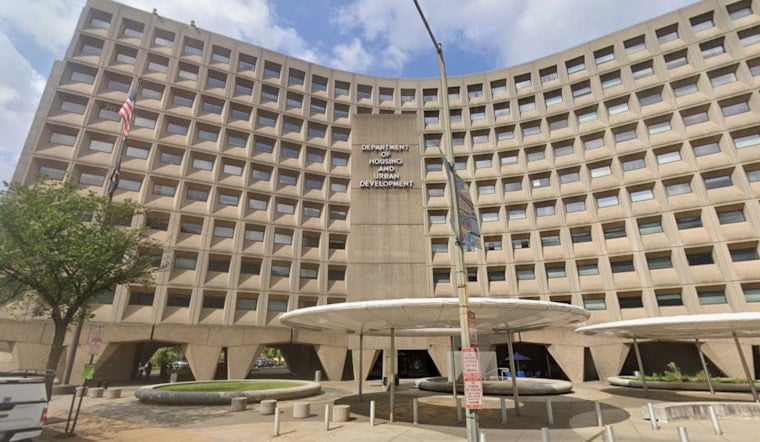
A D.C.-based developer is floating a big idea for one of the federal government’s most recognizable office buildings, turning the Department of Housing and Urban Development's Robert C. Weaver Federal Building at 451 Seventh Street SW into supportive housing with on-site services for people experiencing homelessness. The publicly circulated pitch, shared on Tuesday, would convert the office floors into apartments and add wraparound supports such as case management, health services, and job programs. The developer says it is now seeking financing and partnerships to see whether the plan can move from concept to reality.
Developer's pitch
As reported by the Washington Business Journal, the concept pairs permanent supportive housing units with service space on the ground floor. According to that coverage, the company behind the proposal is pursuing a mix of public subsidies and private capital to make a large-scale conversion financially workable. The submission is described as being in an early phase, with outreach underway to potential service providers and lenders.
Who is behind the plan
Rooted Communities, a D.C.-based development group, is listed as the sponsor on materials tied to the pitch. On its website, the firm highlights a focus on affordable housing, collaborations with community providers, and neighborhood regeneration. Rooted’s stated goal of “building for belonging” lines up with the supportive housing focus described in the proposal.
Where the building stands now
The Weaver Building, HUD's longtime headquarters, was placed on the General Services Administration's accelerated disposition list last year, a move the GSA says opens the property to market engagement and possible reuse. In an April 17, 2025 release, GSA framed the decision as part of a broader effort to “right-size” the federal real estate portfolio. Any proposal from a private developer would have to make it through GSA's sale or lease procedures before a conversion could actually move forward.
Local need for service-rich housing
D.C.'s most recent Point-in-Time count, released this spring, showed a mixed picture, roughly a 9 percent overall decline from the prior year but ongoing gaps for youth and other high-need groups, underscoring the continued demand for supportive housing options. Local reporting on the PIT process highlights why outreach workers and shelters keep pushing for housing that combines apartments with on-site casework and health connections. According to providers, any successful reuse of the building would need long-term subsidies and integrated services in order to deliver lasting exits from homelessness.
What happens next
Materials reviewed by the Washington Business Journal indicate that the developer is soliciting financing and lining up service partners, although the proposal remains preliminary and would require formal GSA approval through the agency’s disposition process. The Weaver Building is listed on the National Register of Historic Places, a status that could introduce preservation review and design constraints for any conversion, and GSA’s prospectus for the property outlines those considerations. Advocates and planners say clear, long-term commitments to supportive services and subsidy streams will be key if the project is to serve people who currently lack stable housing.





