

























































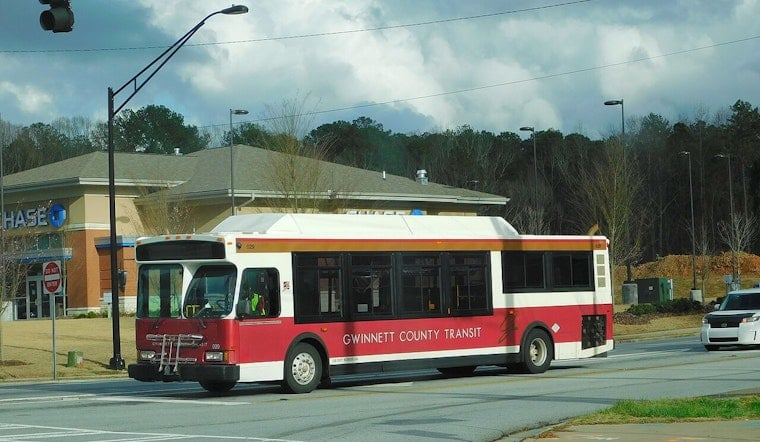
Two years after a high profile bus chase ended near Stone Mountain, the family of the man killed onboard is taking some of metro Atlanta’s biggest public agencies to court.
A new wrongful death lawsuit filed Wednesday accuses a Ride Gwinnett bus driver, Gwinnett County, the City of Atlanta and the transit system’s contractor of failing to act during a June 11, 2024 hijacking that left passenger Ernest Byrd Jr. dead. The complaint says the deadly chain of events unfolded while about 17 people remained on the bus and that there was time for operators to observe what was happening, assess the risk and summon help.
As reported by WSB-TV, the civil suit was filed by Byrd’s daughter, Jazzmyn Byrd. She names the driver, Ride Gwinnett operator Transdev Services, the City of Atlanta and Gwinnett County as defendants. Her attorneys argue the driver failed to maintain order, did not communicate with dispatch and did not seek law enforcement help as the confrontation escalated. They are seeking damages for wrongful death and related claims. According to the station, the filing says the episode “developed over a period of time” while passengers remained on board.
Investigators say the hijacking started after a separate shooting at the Peachtree Center food court, and that Joseph Grier later boarded the commuter bus, got into a dispute with Byrd, grabbed Byrd’s gun and shot him before forcing the driver to flee with passengers still inside. The bus, carrying roughly 17 people, was chased across multiple jurisdictions and was eventually stopped near Stone Mountain, where officers took Grier into custody. That sequence and the slate of criminal charges Grier now faces were detailed by The Associated Press.
In court papers, Byrd argues there was “an opportunity for observation, assessment, communication, and response” while passengers were still aboard the Ride Gwinnett transit bus, according to The Atlanta Journal-Constitution. The complaint also contends that “defendants failed to exercise the degree of extraordinary diligence required of a common carrier under the circumstances presented,” the paper reports.
Video from the day shows Grier speaking with reporters before the bus left downtown. He told them he was “off [his] medication,” and city leaders later pointed to his agitated demeanor, according to news accounts. Police statements and public records describe an extensive arrest history for Grier, who now faces counts that include murder, hijacking a motor vehicle, multiple kidnappings and several aggravated assaults tied to the June 11, 2024 events. Those details appear in press coverage and official releases.
What the complaint says about the driver's response
Byrd’s lawyers say the driver had “plenty of time to observe the situation” as tensions rose but did not alert supervisors or law enforcement. They are also examining whether passengers, including Byrd, received timely medical care once the shooting occurred. The lawsuit names the private contractor, the counties and the city alongside the individual driver and casts the case as a systemic failure of the heightened duty of care that applies to common carriers during a developing security threat. Local reporting that first described the filing notes that the suit is aimed at pressing accountability across the agencies responsible for commuter safety, as reflected in the outlets cited above.
Transit contractor role and safety questions
Ride Gwinnett runs under contract with Transdev, a private operator the county has used while it revisits broader transit plans and vendor responsibilities. The lawsuit is already amplifying questions about how drivers are trained to handle onboard disturbances, what dispatchers are supposed to do as a conflict escalates and when a call to law enforcement should be automatic. The Atlanta Journal-Constitution and other local coverage have put the case in the context of Gwinnett’s ongoing debates over transit oversight and safety protocols.
What comes next
The civil complaint is newly filed and will move on its own schedule while the criminal case against Grier continues. Prosecutors have previously indicated the prosecution required special handling because of a conflict, according to earlier reporting, and Grier still faces a long list of felony charges tied to the June 2024 incidents.
Local outlets report that court dates and the specific damages sought in the wrongful death suit were not immediately clear from initial filings. For now, the civil and criminal proceedings are expected to unfold in parallel, with investigators, lawyers and the agencies involved all under renewed scrutiny over rider safety, contractor oversight and how transit operators respond when trouble starts brewing on the bus.





