

























































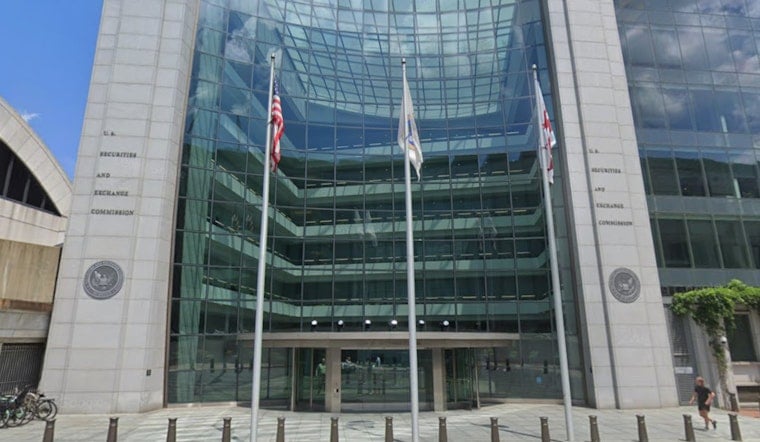
Federal market cops in Washington are taking a hard look at one of private equity’s favorite pressure valves: continuation vehicles, the manager-led funds that let firms move their trophy portfolio companies into fresh structures instead of selling them outright.
The Securities and Exchange Commission has launched a focused review of how those continuation deals are priced, disclosed and governed at a time when GP-led secondaries have exploded in size. The concern is simple enough: when managers sit on both sides of the table, conflicts of interest are never far behind.
According to Reuters, SEC enforcement staff are scrutinizing continuation vehicles used by private equity managers, seeking documents and asking detailed questions about potential conflicts, asset valuations and investor disclosures. Sources told Reuters that staff have built an informal working group that cuts across examinations, investment management and other divisions, coordinating the review since late last year.
The timing tracks the market boom. Evercore’s year-end report shows GP-led transactions hit roughly $106 billion in 2025, helping push total secondary volume to about $226 billion. Single-asset and multi-asset continuation funds have gone from novelty to standard exit option, and the firm’s analysis flags particularly rapid growth in credit-focused GP-led deals. That kind of money tends to make regulators sit up a little straighter. Evercore provides the latest volume figures.
Underneath it all sits a swollen backlog. Bain & Company’s Global Private Equity Report 2026 estimates roughly 32,000 unsold buyout companies worth about $3.8 trillion, a mountain of assets that keeps pressure on managers to find liquidity without slashing prices. The broader private credit market, now a major fuel source for GP-led activity, is estimated at about $1.8 trillion and adds another layer of valuation and liquidity complexity. Bain & Company and the OECD lay out those numbers.
Enforcement officials have been signaling they are ready to move if they do not like what they find. David Woodcock, director of the SEC’s Division of Enforcement, told an industry conference that staff are “attuned to potential risks relating to liquidity, fees, valuations, and conflicts of interest,” and he warned the division will pursue fraud and misleading disclosures where investigators uncover them. That tone suggests the review could easily lead to examination referrals or formal enforcement cases if process gaps or bad marks turn up. The SEC has published his full remarks.
LP Fights and Legal Tests
Limited partners are not waiting on Washington to air their grievances. Some have already dragged continuation deals into courtrooms and arbitration rooms, testing how decision makers view GP-led pricing and process.
One closely watched example: the Abu Dhabi Investment Council sued The Energy & Minerals Group over a proposed sale of Ascent Resources into a manager-run continuation vehicle, a dispute that moved to arbitration and spotlighted precisely the kind of governance concerns regulators are now pressing on. Axios has tracked that case alongside other LP challenges to GP-led deals, while Winston & Strawn has detailed the legal theories investors are testing.
What Regulators Want and How Managers Respond
The SEC’s examinations staff has already tipped its hand. In a June risk alert, officials highlighted adviser economic conflicts and valuation practices as key pressure points for private fund managers, including in GP-led situations. In response, many firms now routinely commission independent valuations or fairness opinions to shore up process and blunt litigation or enforcement risk. The SEC’s Risk Alert spells out those concerns.
Expect fund managers to go even further while the review unfolds. Market lawyers say firms are likely to expand disclosures to LPs, tighten valuation playbooks and more carefully document third-party valuations and governance steps around continuation deals. Industry advisories echo that theme, pushing managers to behave as if an exam team is already in the data room.
For investors, the message is mostly procedural. Continuation vehicles remain a legal and workable tool, but they now carry higher regulatory and litigation risk if governance, valuation or disclosure practices are sloppy. The coming weeks will show whether the SEC’s inquiry stays at the document-request stage or evolves into broader enforcement activity that forces a reset on GP-led deal terms.



