

























































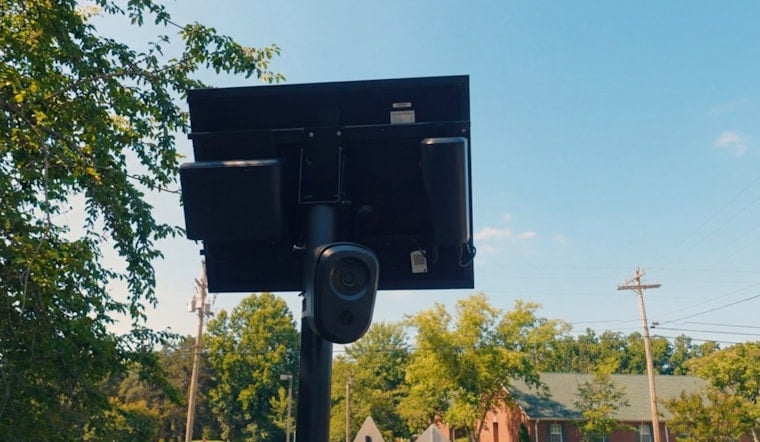
DeKalb is officially hitching its license-plate reader program to Flock Safety, signing off on a two-year contract after a tense City Council meeting where residents lined up to warn about civil-liberties risks and mass data collection. The deal shifts the city’s existing cameras onto Flock’s platform and plugs DeKalb into a broader regional network that police say helps crack serious cases. Critics counter that it effectively builds a searchable map of everyday driving habits and urged the council to hit pause.
Contract approved
Resolution 2026-059, placed on the council’s June 22 agenda, authorizes a two-year agreement with Flock Safety for ALPR service not to exceed $27,500, a total that reflects a discounted platform fee plus a one-time implementation charge. According to the City of DeKalb, the city now pays about $14,576 a year for its Genetec subscription, while Flock’s platform would run roughly $13,500 annually with a $500 setup fee. City staff told council members the arrangement would let police use Flock’s software and hosting while the municipality keeps ownership of the hardware purchased in the program’s second phase.
Neighbors demand answers
During public comment, several residents pressed the council to slow or scrap the switch, and, as the Daily Chronicle noted, no one from the public stepped up to endorse the deal. Police Chief David Byrd stood firmly behind the move, warning that "there are predators in and out of the city of DeKalb every day" and arguing the system is a key tool for tracking suspects quickly. Seventh Ward Alderman John Walker cast the lone "no" vote, while alderpersons Carolyn Zasada, Tracy Smith and Andre Powell were marked absent from the roll call, the Chronicle reported.
Program history
DeKalb first rolled out automatic license-plate readers in 2022, installing 12 Genetec units under a lease that runs through 2027. A second phase in 2023 added nine more cameras, bringing the total to 21 LPRs across nine locations. Per the City of DeKalb, the second-phase cameras are fully owned by the city, a detail staff say helps Flock offer service at a lower rate. Police and city managers told the council the network has already played a role in arrests and wider regional investigations since it went live.
Retention and national debate
On paper, Flock Safety’s data retention rules are straightforward. By default, the company’s platform stores ALPR detections for 30 days, then purges them. According to Flock Safety, anything older than 30 days is hard-deleted unless it is preserved for an active case. That has not settled the larger national fight over ALPRs. Some cities are rethinking or freezing their Flock deals over privacy and oversight issues, and a Cleveland City Council committee recently voted against extending its Flock contract, as Axios reported.
Legal limits
Illinois law also draws some bright lines around how license-plate reader information can be used. The Illinois Vehicle Code (625 ILCS 5/2-130) sets definitions and user prohibitions for automated license-plate readers, including limits on data sharing and on specific uses of the information. The statute, along with recent bills debated in Springfield, has fueled local demands for tighter policies, regular audits and clearer guardrails, as Shaw Local has reported.
What's next
With the contract approved, DeKalb police can start shifting the city’s cameras to Flock’s platform and setting up search permissions and audit controls. Community advocates say they plan to keep the pressure on for written usage rules, detailed audit logs and tight access limits to head off potential abuse. Police, for their part, continue to point to the system’s role in past investigations. Expect the fight over ALPRs to linger as state lawmakers and nearby jurisdictions keep revisiting how, and how tightly, this technology should be governed.





