

























































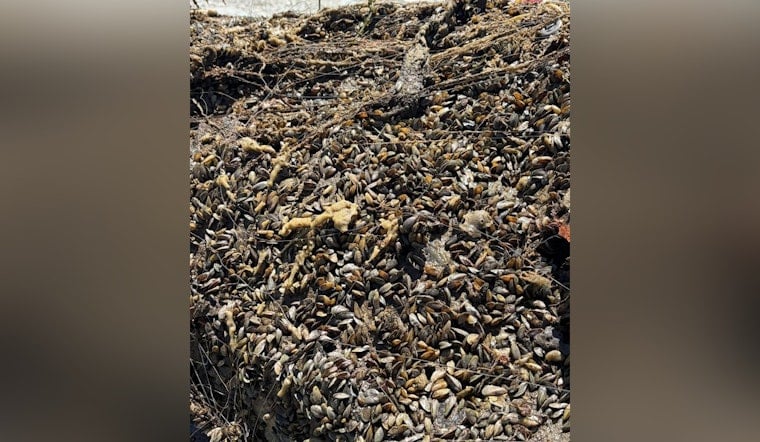
San Joaquin County's dive team has been fishing more than just striped bass out of the Sacramento–San Joaquin Delta. On June 9, deputies hauled several submerged vehicles from the murky channels and found them coated in invasive golden mussels, turning abandoned cars into floating condo complexes for a species no one wants.
The sheriff’s boating safety unit and dive team led the recovery, pulling out derelict cars and other junk from waterways popular with anglers and recreational boaters. The operation, officials said, was about more than tidying up: removing the wrecks cuts down on navigation hazards and wipes out prime colonization spots for the mussels.
In a Facebook post, the San Joaquin County Sheriff's Office described the recoveries as part of ongoing environmental-stewardship and public-safety work, sharing photos that show heavy mussel growth clinging to the vehicles. The agency said crews are targeting debris and abandoned cars to help slow the spread of golden mussels and make Delta navigation a little less dicey.
Why pulling junked cars matters
Golden mussels (Limnoperna fortunei) were first confirmed in the Sacramento–San Joaquin Delta in late 2024 and have a bad habit of colonizing almost any hard surface. The California Department of Water Resources notes that dense colonies can clog intake screens and pipes, foul boat hulls and drive up maintenance costs for water and power systems. The California Department of Fish and Wildlife warns the invaders can also reshape food webs and threaten native species that are already under pressure.
Those agencies emphasize that early detection, targeted removals and quick reporting are key to slowing the spread, which is why even a single junked car pulled from the Delta can matter.
Local and state response
San Joaquin County supervisors declared a local emergency in late April to coordinate funding, mitigation strategies and protections for Delta infrastructure and recreation, according to the San Joaquin County proclamation. The document lays out priorities such as tightening coordination with state agencies and accelerating the removal of hazards that can serve as mussel habitat.
At the Capitol, lawmakers have moved bills and urgency measures, including AB 2032, to speed agency responses and give water managers clearer authority to deal with the infestation, as reported by CBS Sacramento. Assemblymember Rhodesia Ransom's office describes AB 2032 as a tool to help local agencies move faster when golden mussels show up in their waters.
What this means for boaters and infrastructure
The mussel-crusted cars the sheriff’s team dragged out of the Delta are a concrete reminder of how quickly the species can spread once it finds a foothold. Inspectors have already intercepted infested vessels headed for Tahoe and other reservoirs, underscoring how easily the organisms can hitch a ride on trailers, hulls and gear.
Agencies are still hammering home the “Clean, Drain, Dry” message for anyone hauling a boat between waterbodies, and inspections and quarantines are expanding to shield lakes, municipal intakes and irrigation systems. Recent coverage of golden mussels nabbed at the Meyers checkpoint highlights how front-line checks are catching some would-be stowaways before they reach new waters.
The San Joaquin dive operation is just one piece of a larger, multi-agency push to slow the invasion and protect the Delta’s working waterways. Boaters and shoreline visitors who spot suspicious encrustations are urged to photograph what they find next to a coin or ruler for scale and report it to state authorities. For local reporting instructions and identification tips, see the California Department of Fish and Wildlife.




