

























































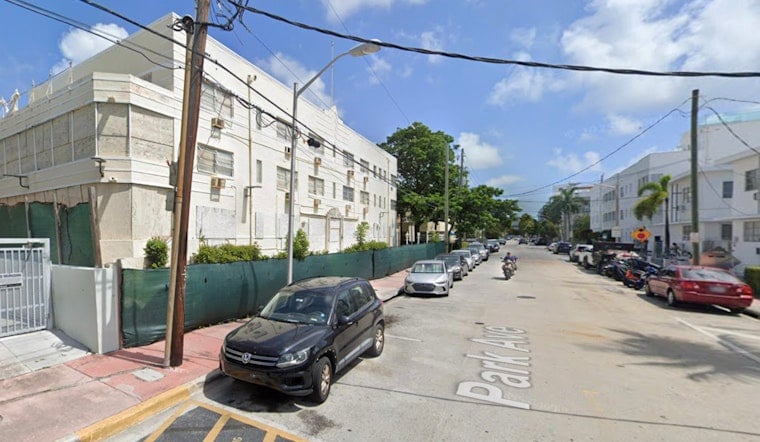
After sitting dark for more than a decade, the Barclay Plaza in Miami Beach might finally be in line for a second act. Legacy Real Estate Development and Urban American are asking the city to let them transform the long-shuttered building into a mid-rise apartment complex that keeps the vintage lobby and tacks on a new six-story tower. Their plan calls for roughly 105 apartments, a small neighborhood retail space and what they bill as an expansive outdoor amenity deck with a pool. The proposal lands on the Miami Beach Planning Board agenda on July 7, 2026, giving nearby residents and elected officials their first formal crack at weighing in.
What the developers want
In planning filings, the development team is seeking a rezoning and density boost to fit about 105 residential units into roughly 78,700 square feet with a six-story profile. The concept keeps and restores the Barclay’s historic lobby, then layers on co-working and fitness areas for residents. The ground floor would include about 1,000 square feet of neighborhood retail, while an 8,600-square-foot outdoor amenity deck with a pool would sit upstairs.
The unit mix leans small: plans show 54 studios averaging 450 square feet, 39 one-bedrooms at roughly 650 square feet and 12 two-bedrooms averaging 926 square feet, according to The Real Deal.
City records trace a long, tangled history
The Barclay’s road to this point has not been quick or clean. City records indicate the property was condemned as unsafe in 2014, and Miami Beach acquired it in 2015 after the nonprofit owner surrendered the title amid compliance problems. A 2024 committee memo outlines a familiar bureaucratic saga: multiple RFPs, feasibility studies and years of back-and-forth before officials settled on a 99-year ground-lease redevelopment model with a joint venture led by Legacy and Urban American, as detailed in City of Miami Beach materials.
Local politics and covenants complicate the move
Even by Miami Beach standards, the politics here are touchy. City officials and housing advocates have argued for years over whether the Barclay should stay in public hands and be brought back as affordable housing, or pivot to a privately operated project under a ground lease.
When the city bought the building, it also recorded a restrictive covenant that locked in affordability through 2030. That limit would need to be lifted by a vote of the City Commission before any private redevelopment proceeds, according to reporting by the Miami Herald.
Developers' promises and affordability math
City staff say the development team has offered a one-time, nonrefundable $2 million payment to Miami Beach and would pick up the tab for design, construction, operation and maintenance under the proposed long-term ground lease.
On the affordability front, the application spells out a relatively modest set-aside: 15 percent of the new apartments would be reserved for households earning up to 160 percent of the area median income, and seven units would remain senior-affordable for the life of the lease, according to The Real Deal.
What happens next
The Planning Board is scheduled to take up the requested zoning and land-use changes on July 7, 2026. Staff notes indicate that even if the board signs off, any ground lease or development agreement would still need a separate thumbs-up from the City Commission, according to City of Miami Beach records.
Residents can show up in person or log in via Zoom, and they are allowed to submit comments ahead of the meeting, as laid out on the city’s event listings from the City of Miami Beach.
Neighborhood stakes
The stakes around the Barclay extend beyond one building’s fate. Critics warn that swapping out a vacant, city-owned affordable property for a privately run, ground-leased project could shrink Miami Beach’s stock of deeply affordable apartments at a time when every unit counts. Supporters counter that adding new, workforce-oriented housing close to jobs could ease pressure on commuters and employers.
The back-and-forth has surfaced repeatedly in commission chambers and local coverage since the 2015 acquisition, with housing advocates and elected leaders pitching competing blueprints for how to preserve affordability on the site, according to the Miami Herald.





