

























































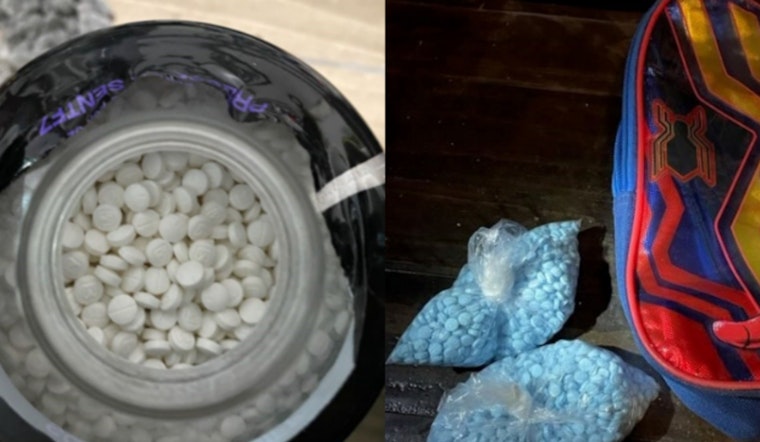
A Maryland man who moved thousands of fentanyl-laced fake oxycodone pills around the Washington region has been hit with a three-and-a-half year federal prison sentence.
Daijon West, 29, was sentenced Friday, June 12, 2026, to 42 months behind bars after admitting he distributed counterfeit oxycodone tablets laced with fentanyl across the Washington metropolitan area. Prosecutors say West pushed thousands of the bogus pills between Maryland and the District of Columbia, exposing buyers to potentially lethal doses. The court also ordered four years of supervised release once he finishes his prison time.
Federal authorities say West’s operation fits a now-familiar pattern for pill trafficking into the DMV. Similar pipelines have repeatedly been traced back to Southern California, where traffickers press and package counterfeit tablets before shipping them east by parcel or passenger travel. In earlier prosecutions, the U.S. Attorney’s Office described smugglers hiding fake pills in everyday consumer products or stuffing them into checked luggage on flights into the region. Multi-agency task forces and postal inspections have been key tools in breaking up those networks, according to the U.S. Attorney’s Office.
What Prosecutors Say Happened
According to DC News Now, West pleaded guilty on Feb. 5 to conspiracy to distribute fentanyl and admitted he was sourcing bulk quantities of counterfeit pills from a California supplier. Prosecutors say those supplies came in through the mail and through in-person trips. Court records show that in 2022, law enforcement intercepted roughly 5,500 counterfeit oxycodone tablets that had been shipped to West’s Maryland home. Laboratory testing confirmed the pills contained fentanyl.
Investigators told the court that West typically sold the tablets in batches of about 100 to 1,000 pills. Prosecutors also said he completed at least nine controlled buys with law-enforcement sources during the investigation, activity they argue reflected an ongoing, organized trafficking operation rather than a one-off sale.
Why Fake Pills Are So Risky
Federal drug investigators have been warning for years that pills that look like legitimate prescription oxycodone are frequently anything but. Counterfeit tablets marketed on the street can be laced with fentanyl, fentanyl analogues, xylazine or other additives that make the effects wildly unpredictable. A single pill can be enough to cause a fatal overdose.
The DEA’s Washington Division reported seizing more than 639,000 fentanyl pills in 2023 across the DMV and noted that most illicit shipments arrive from California and other western states via parcel services or passenger travel. Public-health officials say the surge in these counterfeit tablets has pushed overdose risk higher across local communities and made it harder for users to gauge what they are actually taking.
Sentence And Next Steps
At sentencing, the judge imposed a 42-month federal prison term and four years of supervised release, DC News Now reports. Prosecutors with the U.S. Attorney’s Office said the punishment reflects the number of pills involved, the interstate nature of the trafficking and the serious public-safety threat posed by counterfeit tablets. West remains in federal custody while he awaits transfer to a Bureau of Prisons facility to begin serving his sentence.
Public Safety And Resources
Officials stress that cases like West’s are only one piece of the response to a fentanyl crisis that has turned medicine-cabinet knockoffs into potential poison. Criminal prosecutions, they say, have to be paired with aggressive overdose-prevention efforts, including widespread naloxone distribution, drug-checking where available and accessible treatment.
The DEA’s One Pill Can Kill campaign and local public-health partners provide information and overdose-prevention resources across the Washington region, and community groups continue to push for stronger harm-reduction programs alongside enforcement. Those seeking help for themselves or someone else are urged to reach out to local health departments or visit the DEA’s outreach pages for guidance on treatment and support options.



