

























































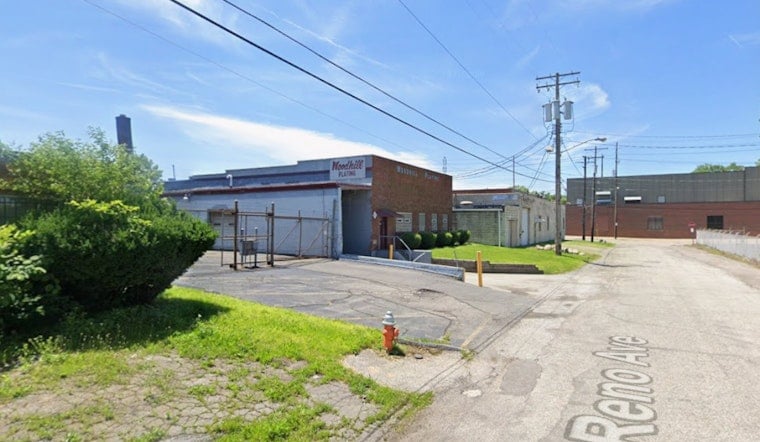
Hazmat crews in white suits and a steady stream of trucks have become the new backdrop on Cleveland’s East Side, as the U.S. Environmental Protection Agency moves to drain a long-troubled industrial site of thousands of gallons of hazardous waste.
The EPA has begun removing roughly 20,000 gallons of metal‑plating liquids and solids from the former Woodhill Plating Works property, a nearly one‑acre site tucked between Reno Avenue and Prince Avenue. Officials say neighbors should brace for more truck traffic and workers in protective gear over the next several months as the agency carries out what is expected to be a two‑to‑three‑month cleanup.
According to the EPA, the property consists of three parcels with a roughly 19,000‑square‑foot building spanning addresses at 9114 Reno Avenue and 9113 Prince Avenue. The agency documented about 20,000 gallons of hazardous waste stored in drums, totes, vats and other containers inside the building, noting that some containers were damaged or unlabeled. The agency’s action memorandum authorized a time‑critical removal under CERCLA and estimated roughly 35 on‑site working days to complete the initial removal and characterization work.
What Crews Are Taking Out
Inside the old plating facility, federal officials found a cocktail of contaminants: chromium, lead, arsenic, various acids, and cyanide salts. In the agency’s language, “improperly storing these materials could result in the release of hazardous substances into the environment,” which is a bureaucratic way of saying you really do not want this stuff leaking into the neighborhood.
As reported by Spectrum News, crews are packaging the waste for off‑site disposal and will decontaminate equipment and building components as part of the response. The materials will be shipped to licensed disposal facilities once they are inventoried, sampled, and secured.
Why EPA Stepped In
State regulators had already been sounding alarms about the site. Ohio EPA inspectors carried out focused compliance inspections in February and March 2023 and issued notices of violation. By December 2024, the state concluded the owner had not corrected the hazards and referred the property to the U.S. EPA.
The federal action memorandum notes that the owner had consolidated plating chemicals and wastes into containers in a newer building addition and that incompatible materials were stored near one another. According to the document, those conditions created an imminent threat to people and the environment and met the criteria for a time‑critical removal action.
What To Expect During The Cleanup
As reported by Spectrum News, the EPA expects the project to run for two to three months and will conduct air monitoring to make sure the cleanup does not foul local air quality. Residents can expect to see fencing around the site, increased truck traffic, and workers in full personal protective equipment while crews work through the inventory and removal process.
Officials say the agency will secure the property and decontaminate process equipment as part of the operation. The removal is aimed at knocking down the immediate threat and stabilizing the site so that some kind of future reuse can eventually be considered.
EPA officials have said they will keep the community updated as work moves forward and recommend that residents follow agency notices and any local advisories while the cleanup is underway.





