

























































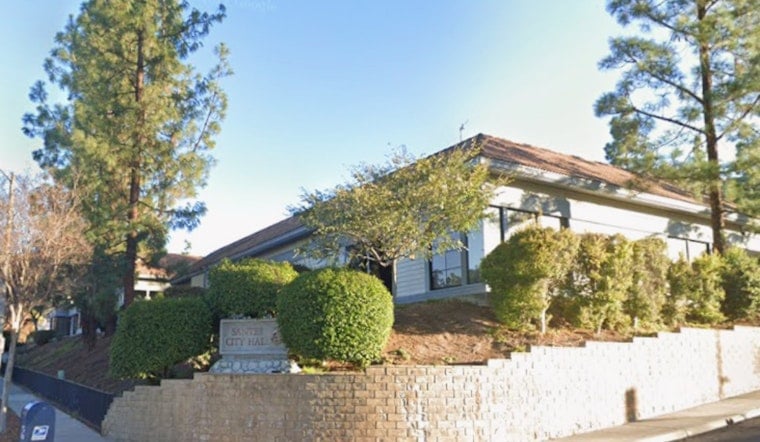
An appellate panel yesterday denied the developer’s appeal and, for now, shut the door on the long‑running Fanita Ranch plan to build 3,008 homes in Santee. The ruling comes after years of sparring over wildfire evacuation routes, habitat damage and whether the city could greenlight higher‑density development without asking voters. Unless the developer somehow lands a rare review from the California Supreme Court, the project is effectively stuck in neutral.
The panel found that the City of Santee and HomeFed pressed ahead with approvals despite running afoul of state planning and environmental laws, and it rejected most of HomeFed’s legal arguments. Nearly every claim in the appeal was turned down, with one Elections Code issue left unresolved. As the Times of San Diego reported, the decision sends the project back under a trial‑court order to rescind its permits.
Fanita Ranch spans about 2,500 to 2,638 acres in northern Santee and has been pitched in various planning documents as supporting roughly 1,395 homes under the city’s older general plan, or up to 2,949 units with a school or 3,008 without one in later applications. The environmental impact reports and project filings outline multiple build‑out options and mitigation schemes. Those records appear in the state’s CEQA database at CEQAnet.
City staff work and council decisions sit at the heart of the fight. In August 2021 Santee adopted an “Essential Housing Program” (Urgency Ordinance No. 592) that allowed staff to sign off on qualifying projects as consistent with the general plan without a formal amendment or a public vote. HomeFed ran Fanita Ranch through that program and secured certification in late 2021. Project opponents argue that move was used to sidestep Measure N’s voter‑approval requirement. Staff reports from the City of Santee detail how the program and certification became central to later approvals.
Court history and lawsuit
A coalition of groups, including Preserve Wild Santee, the Center for Biological Diversity, the Endangered Habitats League and the California Chaparral Institute, sued the city and HomeFed, claiming the project’s environmental impact report and approvals violated CEQA and the State Planning and Zoning Law and that voters were denied a proper say. In August 2024 a San Diego Superior Court judge agreed, issuing a minute order that granted the petition, ordered the city to rescind the permits and froze project activity until the problems were fixed. The minute order and related filings are public court records, summarized by the Center for Biological Diversity.
HomeFed appealed that ruling. On June 4, the Court of Appeal largely backed the lower court, holding that parts of the city’s approval path and the project’s planning analysis did not line up with state law. The appellate panel turned aside most of HomeFed’s challenges and left the Elections Code claim unresolved. The city, for its part, chose not to file its own appeal. As Times of San Diego noted, that combination makes it far tougher for Fanita Ranch to advance without starting over in some form.
What the ruling means
In practical terms, the appellate decision restores the trial court’s order telling the city to pull back Fanita Ranch permits and halt related approvals, putting the project back under a judge’s watch. The developer can still try for discretionary review by filing a petition for review in the California Supreme Court, a process controlled by state appellate rules and usually reserved for cases involving significant legal questions or a need for uniform statewide precedent. The procedures and standards for those petitions are set out in the California Rules of Court.
Off the legal docket, the ruling instantly stops roughly 3,000 potential homes and reopens a familiar local argument over where San Diego County should put new housing and where it should draw the line to protect open space. Opponents have repeatedly flagged wildfire‑evacuation concerns and impacts on chaparral and coastal sage scrub habitat, while supporters have pointed to the site as a way to boost East County’s housing supply. Those tradeoffs are detailed in the project’s environmental review and the trial and appellate filings, which are collected on CEQAnet and in the court record.
The groups that sued have long framed the court decisions as conservation victories, while HomeFed has maintained that it will keep pushing to build housing in East County. City officials, developers and neighborhood groups now face a set of familiar choices, including reworking project plans, negotiating conservation measures or testing their odds with further appeals. For more local context on how this saga has unfolded over time, see prior coverage from KGTV/10News.



