

























































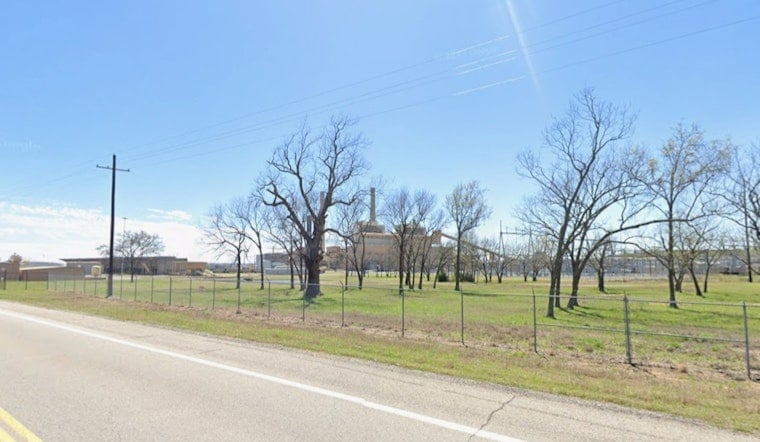
Oklahoma's last coal-fired unit at the Grand River Energy Center in Chouteau is not going quietly. Grand River Dam Authority has pulled back from its original plan to retire Unit 2 and instead will pour money into upgrades to keep the coal unit running for several more years. The shift follows a federal push to steer cash toward coal-plant life extension, which GRDA says now makes a retrofit the cheapest option for local ratepayers. As part of the pivot, GRDA's board has filed to modify the plant's state air-quality permit.
As reported by The Journal Record, the U.S. Energy Department will put up $28.5 million for upgrades at Grand River Energy Center Unit 2. GRDA plans to add roughly $48 million of its own to modernize the coal yard, material-handling systems, water and air delivery systems and parts of the unit's high-pressure boiler. In its permit application, the authority pitches the extension as a "critical reliability bridge" while new power plants are permitted, procured and built. The filing formally reverses the retirement plan and kicks off the state regulator's review.
Federal push to prop up coal
On June 4, the Energy Department announced it would tap Defense Production Act funding to support U.S. coal-fired power plants and export infrastructure, making up to $500 million available for projects under the program. As outlined by the Energy Department, the package includes money to expand plant capacity, modernize equipment and shore up export terminals. Energy Secretary Chris Wright said the moves are aimed at strengthening energy security and keeping generation available during peak demand.
Cost questions and local impacts
The same grant package is also helping Oklahoma Gas & Electric's Sooner plant in Red Rock, which received $22.5 million toward a roughly $57.7 million modernization project that OG&E will partially fund with about $35.2 million. At the same time, GRDA is moving ahead with a $475 million natural gas unit at the Grand River Energy Center, a project originally pitched to replace retiring coal capacity.
"Extending the life of Unit 2 represents the most cost-effective solution for GRDA," President and CEO Dan Sullivan said in a written statement, as reported by The Journal Record.
Pushback and the bigger picture
Environmental advocates are calling the move a taxpayer-funded lifeline for old technology. "Trump is pouring tens of millions of taxpayer dollars into Oklahoma monopoly utility and shareholder pockets to prop up toxic, expensive coal technology," Ty Gorman of the Sierra Club said in local reporting. GRDA's vice president of generation operations, Robert Ladd, has previously warned that Unit 2 faces high regulatory uncertainty and operational risk, and critics argue the federal support slows a shift toward cheaper renewables and natural gas.
Legal and regulatory questions
GRDA's modification request is listed on the Oklahoma Department of Environmental Quality's public-review portal, where regulators and residents can track the permit and submit comments, according to the Oklahoma Department of Environmental Quality. That review, along with any state decisions on air-quality conditions or operational limits, will determine whether the grant-funded upgrades can move ahead.
GRDA is framing the work as a short-term reliability fix while new capacity comes online, but the call effectively ties local power planning to federal policy that could shift with a future administration. For customers and officials across northeastern Oklahoma, the next big milestones will be the board's permit outcome and any rate-case filings aimed at recovering the upgrade costs.





