

























































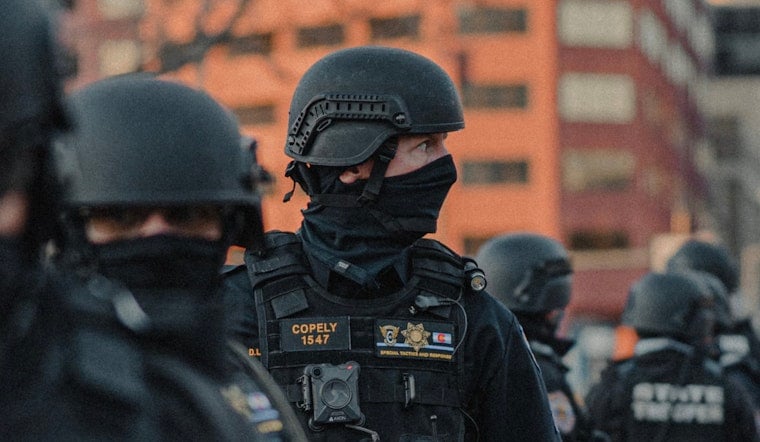
The Justice Department has taken New York to federal court in Buffalo, filing a lawsuit Monday that aims to stop new state rules limiting how federal officers can operate on the ground. At the center of the clash are fresh provisions that would bar federal officers from wearing face coverings and require them to display agency identification while on duty.
The complaint, lodged just days before the measures are set to kick in on Friday, names Gov. Kathy Hochul and Attorney General Letitia James as defendants. Justice Department lawyers argue the state statutes improperly attempt to regulate federal operations and could even expose federal officers to criminal charges.
DOJ says the law targets federal officers
According to the New York Post, the department's roughly 40-page filing, which is signed by Associate Attorney General Stanley Woodward and Assistant Attorney General Brett Shumate, challenges what the complaint labels the "Face Covering and Identification Acts." The Post reports that the suit claims the statutes would pressure local governments to unwind enforcement agreements with federal agencies and would expose federal officers to criminal penalties for wearing face coverings while on the job.
Justice Department attorneys say those provisions collide with federal prerogatives and raise serious concerns about officer safety, especially for agents whose work depends on keeping a low profile.
Part of a national wave of cases
The Buffalo filing drops into a broader pattern of challenges the Civil Division has launched against state and local laws that restrict federal tactics, the Justice Department said in a June press release. That announcement flagged similar complaints in places such as Philadelphia and Virginia and characterized the contested laws as an unlawful bid to regulate federal law enforcement.
Federal officials have framed these lawsuits as necessary to avoid a patchwork of local restrictions that could complicate nationwide operations and heighten safety risks for officers in the field.
What New York's text actually says
In New York, the contested provisions sit inside the state’s 2026 enacted bill under a section titled "Law Enforcement Face Coverings." The statute expressly defines "face covering" to include masks, balaclavas, neck gaiters and similar items and spells out identification requirements for officers when they are performing official duties.
The published bill language also includes terms that could force local governments to reconsider how they structure cooperative enforcement arrangements with federal partners. Those broad definitions and enforcement mechanisms are central to DOJ's argument that the law would interfere with federal functions.
Constitutional questions on the table
In the complaint, department lawyers contend the measures violate the Supremacy Clause and the doctrine of intergovernmental immunity by attempting to dictate how federal officers perform their duties. Coverage of related cases in other states has underscored the same core theory: states cannot criminalize or otherwise regulate federal operations.
Federal judges will now be asked to navigate that tension between state police powers and federal supremacy. How the court interprets those constitutional boundaries will decide whether New York can enforce the provisions as written.
Who would be affected and why agencies object
The New York Post reports that the rules would reach officers from agencies such as ICE and the DEA, who often work in plainclothes or depend on anonymity to shield ongoing investigations and protect their own safety. According to DOJ lawyers, state limits on face coverings and new identification requirements would jeopardize undercover and other sensitive operations.
Assistant Attorney General Brett Shumate is quoted in the filing saying that "the Department of Justice will steadfastly protect the privacy and safety of law enforcement from unconstitutional state laws like New York’s." The complaint also cites Associate Attorney General Woodward, who warns that the governor cannot dictate how federal officers perform their duties.
What happens next
The case now moves forward in the U.S. District Court for the Western District of New York in Buffalo, where a judge will first sort out issues such as standing and the scope of any federal relief. Whatever the initial ruling, the dispute is poised for a likely appeal and could be folded into a growing lineup of cases over similar state and local statutes around the country.
For New Yorkers, the lawsuit tees up a high-stakes showdown between Albany lawmakers who want tighter local rules and a federal government intent on keeping its law enforcement playbook under its own control.



