

























































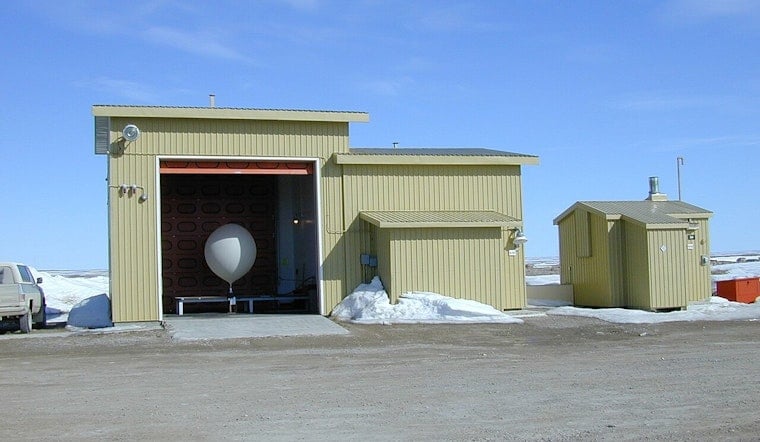
As Minnesota’s storm season heats up, meteorologists say they are flying a little more blind than they would like. With fewer routine weather balloons going up at federal sites, there are now noticeable gaps in the upper-air data that help spot trouble before storms suddenly turn nasty. The National Weather Service has cut or shifted regular balloon launches at several locations after major staff reductions, leaving forecasters with fewer direct measurements of the atmosphere. That thinning network of vertical soundings can shave down warning lead time when severe weather ramps up quickly.
An analysis by the National Weather Service’s own data, reviewed by the Associated Press, found that the agency eliminated or reduced twice-daily radiosonde launches at eight northern stations last year amid widespread staffing changes, according to the Associated Press. The AP reported that launch times have been shuffled at many offices, with some flights moved into the afternoon or skipped altogether, creating patchy coverage across parts of the Plains and Midwest. That timing shift is not a small detail, observers say, because global forecast models are built to ingest coordinated soundings from around the world at set times of day.
Closer to home, the Star Tribune found that Chanhassen and Duluth are still sending up their morning soundings, but neighboring federal sites that Minnesota forecasters lean on have missed key morning launches this month. Federal records show Bismarck, N.D., and Rapid City, S.D., had not released any morning weather balloons in June, and North Platte, Neb., recorded only one morning flight, the paper reported. “Weather balloons represent the only physical measurements that we have that go through the atmosphere,” Kenneth Blumenfeld of the Minnesota Department of Natural Resources told the Star Tribune.
Why upper-air soundings matter
Weather balloons carry radiosondes that track temperature, humidity, pressure and winds from the surface up to the stratosphere, creating a detailed vertical slice of the atmosphere that feeds directly into computer models. The Washington Post has outlined how those direct, co-located measurements help forecasters judge instability, wind shear and freezing levels, subtle ingredients that satellites and radar alone cannot fully capture. When launches are missed or shifted, that reality check on model starting conditions disappears, and it gets tougher to tell which storms are primed to intensify.
Where forecasts could slip
Meteorologists warn that moving or skipping morning launches can open up gaps that skew the initial conditions fed into forecast models and then magnify errors as those forecasts roll forward. The Boston Globe described the situation as “ridiculous” in the context of this spring’s severe weather outbreaks. National Weather Service officials, for their part, have pushed back, saying model performance so far “shows no evidence of overall degradation” from the altered launch schedules, according to E&E News. Private and academic forecasters say the only way to settle the argument is a careful, data-driven review of model skill during the windows when launches were missed or moved.
Storm season so far in Minnesota
Minnesota has already been busy this year. Since April, the state has logged more than 150 severe weather events, including 17 that produced tornadoes and 91 that produced hail at least 1 inch in diameter, according to the Star Tribune. Those numbers are exactly why state officials and local forecasters are watching the balloon program so closely and asking whether fewer upper-air soundings could blunt the lead time on warnings. Meteorologists say steady in-state launches help, but they also rely on neighboring sites to fill in the picture when storm systems sweep across borders.
What the Weather Service Is Doing
The National Weather Service says it is trying to climb out of the staffing hole. The agency secured authorization to hire 450 new employees and had brought on roughly 274 of them, with plans to recruit more this season, according to E&E News. Officials also emphasize that most launch sites are still operating on a normal twice-daily rhythm and that extra soundings will be flown during special operations or severe events. Even so, forecasters and lawmakers are pressing for more transparent analyses that show whether the reshuffled launch schedules have had any measurable impact on model accuracy or warning lead times.
For now, the takeaway is straightforward: the instruments riding up on those balloons provide a rare source of “upper-air truth,” and holes in that network are a real concern during an already active storm season. Forecasters say Minnesotans should keep a close eye on official forecasts and warnings while agencies work to restore stable launch schedules and rebuild staffing.





