

























































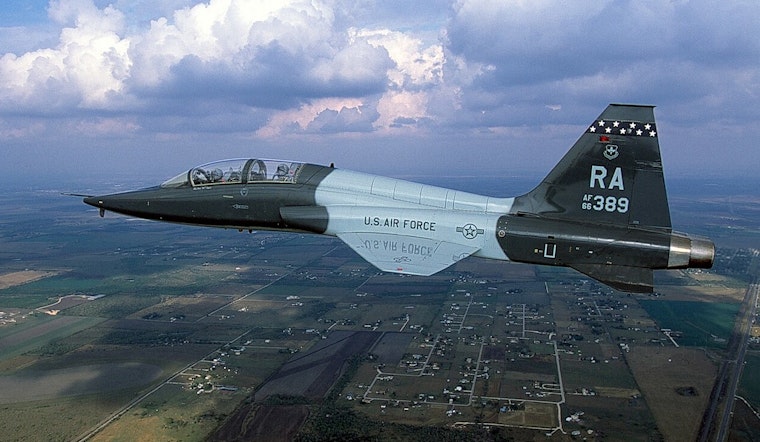
The Air Force’s workhorse trainer is back in the air. On May 28, the U.S. Air Force lifted a fleet-wide operational pause on its T‑38 Talon jets, clearing inspected aircraft to return to flight after a stand‑down that began May 19. The pause followed a May 12 mishap involving a T‑38 tied to Columbus Air Force Base and briefly slowed pilot training at multiple bases. Officials say the jets will return in phases as each aircraft passes inspections and any needed repairs are wrapped up.
What Triggered The Grounding
The May 12 incident involved a T‑38 assigned to Columbus AFB. In a news release, Columbus Air Force Base said two pilots ejected safely, and that a Safety Investigation Board would review what happened. The base noted that more information will come as the investigation moves forward, while local and base teams worked to secure debris at the scene.
Inspections And The Return To Flight
On May 28 the Department of the Air Force announced that the operational pause was over after engineering and maintenance teams finalized inspection procedures. The service said “inspected aircraft will begin returning to flying status within the next few days.” According to AF.mil, the checks apply to aircraft across Air Education and Training Command, Air Combat Command, Air Force Materiel Command and Global Strike Command. While those inspections are underway, aircrews are leaning on simulator time to keep skills sharp and limit disruption to the training pipeline.
Fleet Size And Recent Mishaps
The T‑38 has been the Air Force’s advanced jet trainer for decades, and roughly 475 are still in service, by a recent count from Air & Space Forces Magazine. Local reporting has pointed to a concerning run of mishaps in recent years, with around 10 T‑38 crashes in the last decade and five of them fatal, a pattern that helped spur the latest safety review, as San Antonio Express-News reported.
San Antonio’s Role And The New T‑7
Joint Base San Antonio‑Randolph sits at the center of the Air Force’s undergraduate jet training mission and is already gearing up for the T‑38’s eventual replacement. The base hosted an arrival ceremony for the new T‑7A Red Hawk on Jan. 9, 2026, and the 12th Flying Training Wing will lead early integration of the aircraft, according to JBSA. That transition offers a long-term modernization path even as commanders focus on carefully returning the T‑38 fleet to service.
Broader Safety Review
The pause on T‑38 flights also landed in the middle of a wider Pentagon look at aviation safety nationwide. Defense Department and Air Force leaders have launched a task force to dig into mishap trends and recommend fixes. Air & Space Forces Magazine reports that the group is trying to identify systemic risk factors and shape policy on maintenance, training and flight hours. The results could influence how legacy platforms like the T‑38 are inspected and maintained in the years ahead.
For now, officials say the return to flying will be phased and closely managed while they study any impact on pilot production and graduation schedules. In a statement, AF.mil said commands are “mitigating impacts to operations, training and readiness” as individual jets clear inspections. Training units in Texas and elsewhere will be watching those checklists carefully in the coming days.





