

























































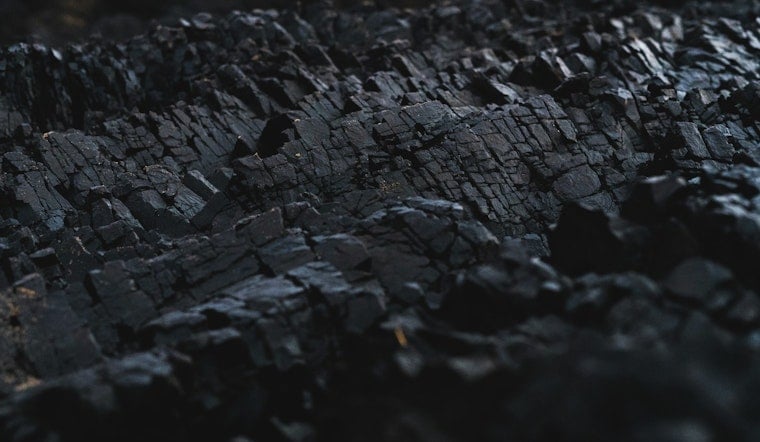
University of Texas researchers say the Gulf Coast is sitting on paper fortunes in rare earth elements, but actually cashing in on that buried value looks like a long shot. The team found hundreds of billions of dollars in total rare earth content across the region's lignite deposits and coal ash. The catch: spread over all that material, the rare earths only add up to a few bucks per ton, which undercuts the idea of building a standalone mining and processing industry around them.
To reach those eye-popping totals, researchers analyzed 118 samples from 13 mines and archived collections across the Gulf Coast. That included 10 Texas mines, two in Louisiana and one in Mississippi, plus material from an abandoned Arkansas mine and clay pits in Tennessee and Kentucky, the university reported Thursday. According to the Jackson School of Geosciences, most of the elements they found are the kind used in permanent magnets for electric vehicles and wind turbines, which makes the deposits strategically interesting even if the business case is shaky.
Big Numbers, Thin Margins
The peer-reviewed paper in the International Journal of Coal Science & Technology, published March 25, estimates roughly $186 billion worth of rare earth oxides locked up in about 58 billion metric tons of Gulf Coast coal. That works out to around $3.20 per ton, assuming a 70 percent extraction yield. Coal ash sitting in ponds and landfills adds another estimated $1.2 billion in value, or about $4.40 per ton at a 30 percent yield. The math makes one thing very clear: enormous tonnages dilute those headline dollar figures in a hurry.
Extraction Tradeoffs
Lab tests and a U.S. Geological Survey summary point to a key technical split. Low rank lignites tend to bind rare earths to organic matter and respond relatively well to weak, more environmentally benign acids. Median recoveries in the study run from about 63 percent to 93 percent. Try the same gentle treatment on coal ash, though, and you only get back a few percent.
Stronger chemical treatments can push coal ash recoveries to roughly 30 percent, according to the U.S. Geological Survey, but that bumps up costs, waste handling and permitting headaches. In other words, the chemistry can work, it just does not necessarily pencil out.
“If you’re already mining the coal, the rare earth elements could be a side hustle,” Brent Elliott said in the university release. The paper’s authors emphasize that making the numbers work will almost certainly depend on selling multiple co products rather than chasing a single suite of metals. James Hower adds that operators need to “get more out of it as a product, not just a little range of elements,” an analogy the team uses to argue that coal processing has to look more like a full service operation to be viable, according to the Jackson School of Geosciences.
The federal government is already testing that theory. The Department of Energy’s National Energy Technology Laboratory runs the CORE CM (Carbon Ore, Rare Earth and Critical Minerals) initiative, which is mapping domestic feedstocks and funding pilot projects aimed at recovering critical minerals from coal and coal byproducts. NETL presents CORE CM as a way to diversify supply chains and create jobs in communities that have long depended on fossil fuel industries.
The journal article and the government summary both stress that economic viability will hinge on co products and broader societal benefits. Recovered rare earths might help offset coal ash cleanup costs or supply downstream manufacturers, but full scale, end to end processing is still unproven. The authors call for pilot projects and partnerships between waste producers and industrial users, and note that local hot spots, such as the Gibbons Creek mine in central Texas, could be better test beds than trying to tackle the entire region at once, per the published study.
For now, the bottom line is cautious. Gulf Coast coal and ash contain technically recoverable rare earths, but turning that into a profitable stand alone industry looks unlikely without cheaper processing, supportive policy or lucrative co products. Researchers and Department of Energy programs suggest the most realistic near term path is a wave of pilot projects with coal operators and manufacturers to see whether this “side hustle” can survive real world cost curves and permitting paperwork.





